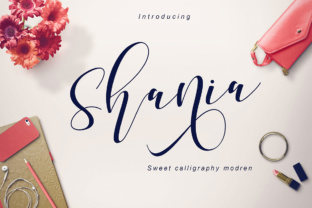
Shania and the Unspoken Craft of Handmade Typography
Typography has long been the quiet backbone of visual communication, shaping how messages land before a single word is read. Among the vast ecosystem of digital typefaces, a growing appetite for authenticity has pushed designers and content creators toward fonts that carry human warmth. Shania belongs squarely in this category. It is not merely a set of letters; it is a painstakingly constructed handmade font whose personality emerges from 270 individually crafted glyphs. Each character carries subtle irregularities that no algorithm can replicate, making every word set in Shania feel like a one-off piece of hand lettering.
What distinguishes Shania from the thousands of fonts available today is not just its sweet, approachable appearance but the deliberate effort behind its glyph count. A standard font might ship with around 80 to 120 characters covering basic Latin, numerals, and punctuation. Shania more than doubles that number, offering an expanded set that includes stylistic alternates, ligatures, and extended language support. This richness transforms the font from a simple tool into a creative instrument, giving typographers and hobbyists alike the freedom to compose text that feels genuinely handcrafted.
The Role of Handmade Fonts in Modern Visual Communication
Handmade fonts have experienced a notable resurgence over the past decade, and their staying power is no accident. In an era dominated by clean sans-serif interfaces and algorithmic uniformity, audiences have developed a hunger for imperfection. Letters that tilt slightly, vary in stroke weight, or carry unexpected serifs signal authenticity. Shania embodies this trend perfectly because its handmade origin is visible in every curve. The font does not try to hide its human origins; it celebrates them.
For professionals working in branding, editorial design, or social media content, choosing a handmade font like Shania sends an unspoken message: this piece was made with care, not mass-produced. The 270 unique glyphs provide enough variety to keep the text visually engaging across longer passages while maintaining coherence. Unlike some decorative fonts that exhaust the eye after a few lines, Shania strikes a balance between distinctiveness and readability. The sweet, almost whimsical quality of its letterforms works well for projects that need to convey warmth, approachability, or a sense of personal touch.
From a psychological perspective, handmade typography reduces the cognitive distance between the reader and the creator. When someone sees letters that look drawn rather than typed, they intuitively sense a human presence behind the message. This is why handmade fonts appear so frequently in invitations, thank-you notes, packaging for artisanal products, and small business branding. Shania fits naturally into these contexts because its glyphs were designed with that exact emotional resonance in mind.
Understanding the Value of 270 Unique Glyphs in a Single Typeface
To appreciate what Shania offers, it helps to understand what a glyph actually is and why quantity matters. A glyph is not the same as a character. A character is the abstract idea of, say, the letter A. A glyph is the specific visual representation of that letter in a given context. In a font with multiple alternates, a single character can have several glyphs. This is where numbers like 270 become meaningful.
With Shania, designers gain access to multiple versions of many letters, allowing them to avoid the repetitive look that plagues standard fonts. In a typical digital font, the same e or a appears identically every time. In Shania, alternate glyphs can be substituted in to create a varied, organic texture across a block of text. This is especially valuable for headlines, logos, quotes, and any setting where the typography itself serves as a visual element rather than just a vessel for the message.
The glyph count also includes accented characters for multilingual use, ligatures that combine letter pairs into graceful single forms, and punctuation that maintains the handmade aesthetic. For educators, researchers, and business owners who need to present materials in multiple languages, this breadth eliminates the awkwardness of mixing a handmade font with a generic fallback for special characters. Everything stays consistent because Shania already includes the necessary repertoire.
Another practical advantage of a high glyph count is the ability to create truly unique compositions. A graphic designer working on a festival poster can use Shania to set the same word several times, each time with a different set of alternates, producing a hand-lettered feel without redrawing anything. This saves time while preserving the bespoke aesthetic that clients often request. For hobbyists creating scrapbooks, wedding invitations, or personal projects, the variety keeps the process enjoyable and the outcomes surprising.
Where Shania Fits Best: Practical Applications Across Media
The question that naturally arises with any distinctive font is where it can be used effectively without overwhelming the message. Shania, despite its handmade charm, is more versatile than many decorative typefaces because its sweetness does not sacrifice clarity. The letterforms remain legible at moderate sizes, and the generous spacing between characters prevents crowding.
Branding for small businesses is one of the strongest use cases. Bakeries, florists, children's boutiques, craft studios, and cafes often rely on typography to communicate their personality. A sans-serif font might feel too cold, while an overly ornate script might feel inaccessible. Shania sits in a welcoming middle ground. Its hand-drawn quality suggests homemade care, and the 270 glyphs allow the brand to maintain visual consistency across packaging, signage, menus, and social media while still offering enough variation to keep the identity fresh.
Editorial and publishing environments can also benefit, particularly in headings, pull quotes, and section openers. Magazines focused on lifestyle, travel, food, or craft often incorporate handmade typography to break up body text and inject personality. Shania works well at larger sizes where the texture of the hand-drawn strokes becomes a visual feature. Paired with a clean serif or sans-serif for the body, it creates a contrast that guides the reader naturally through the layout.
Digital content and social media represent another natural fit. Instagram stories, YouTube thumbnails, blog headers, and email newsletters all compete for split-second attention. A memorable typeface can be the difference between a scroll-past and an engagement. Shania stands out in these environments because it does not look like every other digital font. Its handmade origin gives it a tactile quality that translates well on screen, especially when used selectively for call-to-action text or featured phrases.
Event materials such as wedding invitations, birthday announcements, holiday cards, and party signage benefit enormously from a font that feels personal. Many couples and event planners search for typefaces that convey intimacy without being overly script-like. Shania offers that balance. The 270 glyphs allow for customization of names, dates, and locations, making each piece feel individually lettered even when produced digitally.
Educational materials for children present a less obvious but equally compelling application. The friendly, rounded forms of Shania can make worksheets, flashcards, and storybooks feel less institutional and more inviting. For educators creating their own materials, the ability to use a single font across multiple resources without visual monotony is a practical advantage.
Working With Handcrafted Fonts in Professional Workflows
Integrating a handmade font like Shania into a professional design workflow requires some consideration, but the process is straightforward with modern design tools. Most major software applications, including Adobe Creative Suite, Figma, Affinity Designer, and Canva, support OpenType features. This means the alternate glyphs, ligatures, and stylistic sets within Shania can be accessed through character panels or OpenType menus rather than requiring manual substitution.
For designers who are new to working with extended glyph sets, the learning curve is minimal. Once the font is installed, the alternates appear alongside the standard characters. Selecting a different glyph for a specific instance is as simple as clicking. Over time, users develop an intuitive sense of which alternates work best for different contexts, such as using bolder variants for emphasis or more delicate forms for elegance.
One consideration when using Shania in longer text passages is that the handmade irregularities, while charming, can become fatiguing if applied too broadly. The font shines brightest in display sizes, headlines, and short to medium-length text blocks. For body copy exceeding a few sentences, pairing it with a neutral companion font often produces the best reading experience. A simple serif like Georgia or a clean sans-serif like Lato can ground the page while letting Shania take the spotlight where it matters most.
Another workflow consideration is color and background treatment. Handmade fonts tend to look best against solid or subtly textured backgrounds where the letterforms can breathe. Busy patterns or heavily compressed JPEG backgrounds can compete with the font's organic strokes, diminishing its impact. For maximum effectiveness, designers should treat Shania as a visual asset in its own right and give it enough space to be seen clearly.
File format is also worth noting. When exporting projects that use Shania for print, using high-resolution formats ensures that the fine details of the hand-drawn strokes remain crisp. For web use, proper font embedding via CSS @font-face rules or services like Google Fonts or Adobe Fonts (if available) preserves the glyph variety across browsers. Testing the font at different sizes and on different devices before finalizing a project can prevent surprises with legibility or spacing.
What to Consider When Choosing a Decorative Handmade Font
While Shania offers an impressive array of glyphs and a sweet aesthetic, it is always wise to evaluate any font against the specific requirements of a project. Not every decorative font works for every message, and handmade fonts come with their own set of trade-offs.
Legibility at small sizes should be tested early. Because handmade fonts deliberately introduce irregularity, some letterforms may become harder to distinguish at small point sizes. For Shania, the rounded forms and generous spacing help maintain readability down to about 12 or 14 points, but each project should be verified. For text that will appear at very small sizes, such as fine print or captions, a simpler companion font is advisable.
Context and audience matching is another factor. A handmade font that feels perfect for a children's book might feel out of place in a corporate annual report. Shania leans toward the warm, approachable, and creative side of the spectrum. It suits brands and projects that want to emphasize humanity over formality. For legal documents, medical communications, or financial reports, a more neutral typeface would be appropriate, while Shania could still be used for section headers or cover pages if a touch of personality fits the brand.
Licensing and usage rights should always be confirmed before deployment. Some handmade fonts have restrictions on commercial use, number of users, or embedding in web applications. Understanding the license terms ensures that the font is used legally and ethically, and that the designer or business owner does not encounter issues down the line.
Availability of complements is worth considering as well. A font like Shania will rarely be used alone in a comprehensive design system. Having a handful of well-matched companion fonts ready, both serif and sans-serif, makes it easier to build cohesive layouts without scrambling for pairings mid-project. Many designers maintain a small library of fonts that they know work together, and adding Shania to that library expands the range of emotional tones they can strike.
The Broader Context of Glyph-Rich Handmade Typefaces
The emergence of fonts like Shania reflects a larger shift in the design world toward authenticity and craftsmanship. As artificial intelligence and automation continue to reshape the creative industries, the value of human-made artifacts only increases. A handmade font carries with it the time, attention, and imperfect beauty of its creator. The 270 glyphs in Shania are not just characters; they are evidence of a human hand making decisions about curves, angles, and spacing.
For educators teaching typography and design, fonts like Shania serve as excellent case studies for discussions about emotional resonance, character design, and the role of limitation in creativity. The constraints of a handmade approach, where each letter is drawn individually rather than generated parametrically, force a level of intentionality that students can learn from. Observing how subtle variations in stroke width or baseline drift affect the overall feel of a word is a practical lesson in the psychology of type.
For researchers studying visual communication, the popularity of handmade fonts offers insights into contemporary aesthetic preferences. The desire for imperfection in an increasingly perfect digital world suggests a cultural longing for connection, for the visible trace of another person. Shania participates in this cultural moment by offering designers a tool that is both functional and emotionally charged.
For hobbyists and creators working outside professional design contexts, a font like Shania lowers the barrier to producing beautiful, personalized work. Without needing to learn hand lettering or invest in expensive calligraphy tools, anyone can create text that looks lovingly handmade. The 270 glyphs provide enough flexibility to make projects feel unique, whether it is a birthday banner, a blog header, or a custom print for the home.
As the font landscape continues to evolve, the distinction between digital and handmade will likely blur further. But fonts like Shania will retain their appeal because they occupy a specific niche: they are digital enough to be practical, but handmade enough to feel human. For anyone seeking to add warmth, character, and a sense of genuine care to their text, a font with 270 unique glyphs and a sweet disposition is more than a tool. It is a creative partner. Whether you are a professional building a brand identity, an educator preparing classroom materials, or a hobbyist working on a personal project, Shania offers a level of depth and personality that standard fonts simply cannot match. The hand behind the letters is present in every stroke, and that presence makes all the difference.