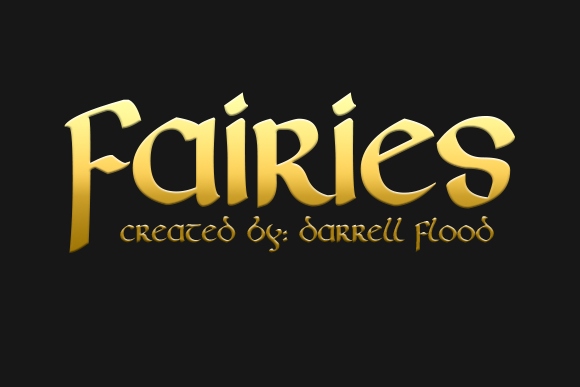
Fairies and the Art of Celtic Type: How Darrell Flood's Book of Kells-Inspired Font Captures Magic
There is something deeply enchanting about the intersection of myth, letterform, and design. When we think of fairies, we often imagine delicate, otherworldly figures dancing through misty glens or whispering secrets from ancient oaks. Now imagine capturing that same ethereal quality in typography. That is precisely what Darrell Flood accomplished with his elegant Celtic-style font, drawing directly from the character forms found in the illuminated masterpiece known as the Book of Kells. This article explores how that marriage of fairy lore and medieval calligraphy creates a tool that is both historically resonant and surprisingly practical for modern creative work.
Why Fairies and Celtic Letterforms Belong Together
The connection between fairies and Celtic design runs deeper than aesthetic preference. In Irish and Scottish folklore, fairies were not mere decorative creatures. They were woven into the very fabric of the landscape, appearing in stone circles, standing stones, and the margins of illuminated manuscripts. The scribes who created the Book of Kells worked in a world where the line between the natural and supernatural was thin. Their intricate knotwork, spirals, and animal forms were not just ornamentation. They were visual prayers, protective symbols, and perhaps even nods to the fairies and spirits that inhabited their world.
Darrell Flood understood this connection when he developed his font. He did not simply copy letterforms from the Book of Kells. He studied the rhythm, the weight, and the subtle irregularities that give those ancient characters their living quality. The result is a typeface that feels inhabited. When you set type in this font, the letters seem to move. They curve and stretch like willow branches. They knot together like the fairies themselves weaving spells in the twilight. This is not a font you use for mundane text. It is a font you use when you want your words to carry the whisper of something older and wilder.
The Design DNA of a Fairy-Touched Typeface
What makes a font feel fairy-like? It is not just flourishes or decorative swashes. It is the underlying structure of the letters. In Flood's font, the lowercase glyphs often feature elongated ascenders and descenders, reminiscent of the tall, slender forms we associate with fairies in Celtic art. The terminals of strokes sometimes taper into fine points, like the tips of a fairy's wings. The bowls of letters like b, d, p, and q are not perfectly round. They are compressed, organic, almost breathing.
- Knotwork integration: Some letterforms incorporate interlacing patterns that echo the famous knotwork of the Book of Kells. These are not added as afterthoughts. They are built into the skeleton of the character.
- Uncial and half-uncial influences: The font draws heavily on the uncial script style used by Irish monks. These rounded, open forms give the typeface a warm, approachable feel, even when the subject matter is mystical.
- Variable stroke weight: Unlike modern geometric fonts, Flood's typeface has a calligraphic rhythm. Thick and thin strokes alternate naturally, mimicking the pressure of a quill pen dipped in ink made from soot and oak gall.
- Swash capitals: The uppercase letters are where the fairy energy truly shines. Some extend into sweeping curves that could easily be mistaken for a fairy queen's robe trailing across the page.
This combination of features makes the font immediately recognizable as Celtic, but more importantly, it makes it feel magical. Designers who work with fantasy themes, Celtic mythology, or fairy folklore will find that this typeface does half the storytelling work for them.
Practical Applications in Modern Creative Workflows
You might wonder whether a font this ornate has any place in contemporary design. The answer is yes, but you need to use it with intention. Flood's font is not a workhorse for body text. It is a display typeface, meant for headings, titles, pull quotes, and short passages where its personality can shine. Here are several scenarios where this font proves its worth.
Book Covers and Interior Design
If you are publishing a collection of fairy tales, a novel about the Tuatha Dé Danann, or even a modern story where fairies appear as characters, this font can set the tone immediately. A title set in Flood's typeface tells the reader, even before they read a single word, that this story belongs to the Celtic tradition. It also works beautifully for chapter headings, especially if you pair it with a simple, clean serif or sans-serif for the body text. The contrast between the ornate headline and the readable body creates a visual hierarchy that guides the reader's eye naturally.
Branding for Fairy-Inspired Businesses
There is a growing market for brands that evoke Celtic mysticism. Think of tea companies, crystal shops, yoga studios, and artisan jewellers who draw inspiration from fairy lore. Using Flood's font in logos, signage, or packaging materials gives these businesses an authentic, handcrafted feel. It suggests that the brand values tradition, artistry, and a touch of the supernatural. Of course, you must ensure the font remains legible at small sizes. For logos, you might use a single initial or a short word mark where the letterforms can be appreciated fully.
Event Invitations and Decor
Bridal showers, fairy-themed birthday parties, and Celtic wedding invitations are natural fits for this typeface. The elegant, flowing lines convey romance and whimsy. Imagine an invitation that reads, "You are cordially invited to a gathering of fairies and friends beneath the summer moon," set in this font. The words themselves become part of the decoration. You can even use the font for table place cards, menu headers, or signage at the event venue. The key is to keep the text short so that the beauty of each letterform is not crowded.
Digital Design and Web Typography
Modern web designers sometimes shy away from decorative fonts, fearing they will slow down load times or break on smaller screens. However, Flood's font, when properly converted to web formats like WOFF2, can be used for hero section headings, banner text, or call-to-action buttons on fantasy-themed websites. It works especially well on dark backgrounds, where the lighter stroke weight of the letters seems to glow. Pair it with a subtle Celtic knot border or a background image of a misty forest, and you have a design that feels immersive without being overwhelming.
Common Factors to Consider Before Choosing This Font
No typeface is perfect for every situation, and Flood's Celtic-inspired font is no exception. Here are some practical considerations you should keep in mind before adding it to your design toolkit.
- Legibility at small sizes: The intricate details that make this font beautiful at 48 points can become muddy at 12 points. Avoid using it for long paragraphs or small captions. Reserve it for elements where you can control the size and spacing.
- Licensing and usage rights: As with any font created by an independent designer, you need to check the license. Some fonts are free for personal use but require a commercial license for branding or product packaging. Darrell Flood's work is typically well-documented, but always read the fine print.
- Pairing with other typefaces: This font has a strong personality. Pair it with neutral, unobtrusive typefaces like Open Sans, Lora, or even Georgia. Avoid pairing it with other decorative fonts, as the result can look chaotic. A good rule of thumb is to let Flood's font be the star and everything else play a supporting role.
- Cultural sensitivity: The Book of Kells is a sacred artifact of early Christian Celtic art. Using its letterforms for frivolous or disrespectful purposes may be seen as inappropriate by some. When you use this font, do so with an appreciation for its origins. It is not just a pretty set of letters. It is a piece of cultural heritage.
- File formats and compatibility: Ensure you have the font in the right formats for your workflow. OTF and TTF work well for print. WOFF2 is best for web. Some older design software may not support advanced OpenType features like swash alternates or ligatures, so test thoroughly before committing.
Observations from Using This Font in Real Projects
Having worked with Flood's typeface on several projects, I can offer a few observations. First, the font demands space. Do not crowd it. Let the letters breathe with generous letter-spacing and margins. Second, it responds well to colour. A deep forest green, a midnight blue, or a warm gold all enhance the Celtic and fairy associations. Third, the font has a surprising emotional range. In all caps, it can feel regal and imposing, suitable for a fairy king's decree. In lowercase, with its soft curves, it feels intimate and gentle, like a fairy whispering a secret.
One project that stands out was a book of Irish fairy tales I helped design for a small independent press. We used Flood's font for the title on the cover, then used a clean serif for the story text. Each chapter heading featured a single decorative initial from the font, inspired by the illuminated initials in the Book of Kells. Readers frequently commented that the typography made the book feel like a treasured artifact, something that could have been handed down through generations. That is the power of a well-chosen typeface. It does not just display words. It transports the reader.
How This Font Fits into a Broader Typographic Landscape
There is no shortage of Celtic-style fonts available online. Many are amateurish, relying on clichéd motifs like shamrocks and harps. What sets Flood's work apart is its fidelity to the authentic letterforms of the Book of Kells. He did not simplify or modernise them into blandness. He preserved their quirks, their asymmetry, and their handwritten warmth. In a design world that increasingly values authenticity and handmade aesthetics, this font feels refreshingly real.
For designers and writers who work with fairy themes, this font is a bridge between two worlds. On one side is the ancient, sacred art of the Celtic monks. On the other is the playful, elusive spirit of the fairies. Flood's typeface holds both in balance. It is respectful of its source material, yet light enough to dance across the page. If you are looking for a way to add genuine Celtic magic to your projects, without resorting to stereotypes or kitsch, this font deserves a place in your collection.
Final Thoughts on Using a Fairy-Inspired Celtic Font
The best design tools are the ones that make you feel something. Darrell Flood's font, born from the Book of Kells and shaped by a deep understanding of Celtic letter art, does exactly that. It evokes the presence of fairies without being literal. It speaks of ancient forests, misty mornings, and stories told by firelight. When you use it wisely, with consideration for legibility, context, and cultural respect, it elevates your work from ordinary to unforgettable. Whether you are designing a book cover, a wedding invitation, or a brand identity for a business rooted in Celtic tradition, this typeface offers a direct line to the enchantment that lies just beyond the edge of the page.