Motherline: A Vintage Font Set with Six Distinct Personalities
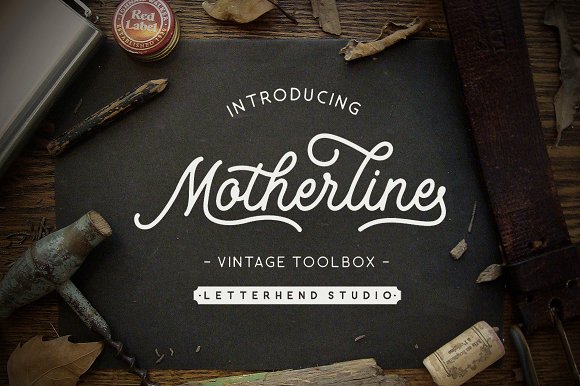
Every now and then a typeface lands on your desk that feels less like a tool and more like a discovery. Motherline, created by the Letterhend foundry, is exactly that kind of find. It arrives as a set of six unique fonts, each one carrying a distinct vintage character while still feeling cohesive enough to work as a family. If you have spent any time searching for a premium font that brings warmth, nostalgia, and versatility to your projects, this one deserves a closer look.
What Motherline Looks Like and Why It Feels Different
Motherline does not shout. It invites. The overall personality leans toward the handcrafted, the imperfect, the kind of lettering you might find on an old product label, a weathered sign, or a forgotten book cover. Each of the six styles brings something specific: some are bold and sturdy, others are delicate and flowing, and a few sit somewhere in between. There is a serif font in the set that carries a gentle, old-world weight, and a script font that feels like ink on paper rather than something drawn with a digital stylus. A handwritten font adds an even more personal, almost diaristic touch, while a sans serif font in the collection offers cleaner lines that still retain the vintage soul of the rest of the family.
What makes Motherline stand out among modern typography offerings is that none of the fonts feel sterile. Even the cleaner options carry subtle texture, slight irregularities, and a sense of being made by hand. That is hard to achieve in a commercial font, and Letterhend has done it well. The set does not try to be everything to everyone. Instead, it owns its niche: warm, nostalgic, and thoroughly usable.
Where Motherline Works Best Across Creative Projects
If you work in logo design, this font set gives you room to explore. A brand that wants to feel established, trustworthy, and slightly nostalgic can lean on Motherline's serif or display weights for a strong mark. For a more playful or artisanal brand, the script and handwritten options add personality without veering into gimmick territory. I have seen similar vintage typefaces struggle in logo work because they look great in isolation but fall apart when scaled down or paired with other elements. Motherline holds up better than most, partly because the proportions are thoughtful and partly because the set gives you choices that let you match the weight to the application.
Editorial design is another natural home for this typeface. Whether you are laying out a magazine feature, a zine, or a brand publication, Motherline brings a tactile quality to headlines and pull quotes. The serif font works especially well for subheadings that need presence without competing with body copy. For book covers, particularly in genres like historical fiction, memoir, or lifestyle, this set can set the tone before a reader even opens the page. Packaging design also benefits: think coffee bags, skincare labels, candle boxes, or anything that wants to signal craftsmanship and care. The handwritten font in particular feels like it belongs on a small-batch product where the story matters as much as the contents.
Digital and Print Applications
On the digital side, web design can feel cold when every font on the page is too clean or too uniform. Motherline works well for hero headings, navigation accents, and social media graphics where you want to break away from the expected. It is not a body font for long-form reading on screen, but as a display font it brings character that keeps visitors engaged. For bloggers and content creators who want their site to reflect a specific aesthetic, using Motherline for post titles or section headers can create a consistent, memorable look without overhauling the whole layout.
In print, the font set shines in smaller runs where production quality can be controlled. Posters, flyers, invitations, and stationery all benefit from the warmth these fonts carry. If you have ever printed a project that looked flat despite good design, the issue was often the typeface. Motherline has enough texture and personality to hold its own on uncoated paper or with letterpress-style finishes.
How Motherline Influences Readability, Brand Perception, and Audience Engagement
Readability with a display font is always a balancing act. Motherline manages it by keeping letterforms clear even in its more decorative styles. The script font is legible enough for short phrases and taglines, while the serif and sans serif options handle longer headlines with ease. That matters because readability directly affects how long someone stays with your content. If a headline takes effort to decode, the reader moves on. Motherline draws them in instead.
From a brand perception standpoint, this font set signals authenticity. In a world where so much design relies on the same handful of default typefaces, choosing a vintage-inspired set like Motherline tells your audience that you value character over convenience. It works especially well for businesses in the food, beverage, wellness, fashion, and creative services sectors where brand identity hinges on emotional connection. Consistency across materials becomes easier when you have six fonts from the same family, because they are designed to work together. That does not mean you should use all six in one project, but having the range allows you to maintain the same voice across different formats.
Audience engagement often comes down to whether people feel something when they see your work. Motherline has a nostalgic pull that resonates with adults in their twenties through fifties, the very audience that remembers or romanticizes the eras this typeface references. It is not about mimicking the past. It is about borrowing its warmth and making it feel current. That is a hard line to walk, and Motherline walks it well.
Practical Guidance for Choosing and Using Motherline
Before you commit to any creative font for a project, take the time to evaluate fit. Start by asking what the project needs to communicate. If the answer involves trust, heritage, craftsmanship, or personality, Motherline is worth testing. If the project demands cold precision or ultra-modern minimalism, you might look elsewhere. That is not a weakness. Every premium font has its place, and knowing where a typeface belongs saves you time and frustration.
Testing Font Pairings and Included Styles
When you open the set, spend time with each of the six styles individually before trying to combine them. Notice how the serif font carries weight differently from the script font. Pay attention to x-heights and stroke contrast. A common mistake with display fonts is pairing two styles that compete instead of complement. With Motherline, a good starting point is to use the serif or sans serif font for primary headlines and the script or handwritten font for accents. Keep the ratio heavy on the cleaner side and use the more decorative styles sparingly. That approach maintains hierarchy and prevents visual noise.
For body copy, Motherline is not designed to carry long paragraphs. If your project includes substantial text, pair it with a neutral, highly readable body font. A simple sans serif or a classic serif with good legibility at small sizes will let Motherline do the heavy lifting where it performs best: headlines, titles, logos, and short statements.
Readability Considerations and Licensing
Always test your chosen font at the actual size it will appear. What looks beautiful at 72 points can become muddy at 24 points, especially with script or handwritten styles. Print a test page or set up a mockup on screen before finalizing. Adjust tracking and leading as needed. Motherline responds well to generous spacing, particularly in its more ornate styles.
On the licensing side, check the terms for your specific use case. Letterhend provides standard commercial licensing that covers most personal and business projects, including branding, packaging, and digital assets. If you are building a brand identity for a client or using the font in a product that will be sold, confirm the license covers that scope. It is a straightforward process, and knowing you have the right permissions lets you work without worry.
Final Thoughts from a Design Perspective
Motherline is not the kind of font set you buy because you need one more option in your library. It is the kind you buy because it solves a specific problem: how to make work feel human again. The six fonts give you range without fragmentation, and the vintage personality is consistent without being predictable. Whether you are designing a logo for a local bakery, laying out a small-press book, or building a brand identity for a new wellness line, this set offers a shortcut to warmth and authenticity. That is rare in commercial typography, and it is worth holding onto when you find it.