Syabab: A Bold Brush Script for Creative Projects
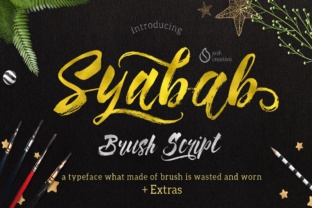
Some fonts feel polished and predictable. Syabab is not one of them. This brush script carries the raw energy of old worn-out brushes, giving every character a worn, textured edge that feels both spontaneous and deliberate. If you have spent time searching for a display font that brings personality without sacrificing legibility, Syabab offers a compelling balance. It is not trying to be a quiet serif font or a neutral sans serif font. It is a script font that announces itself with confidence, making it a strong candidate for projects where you need bold, freestyle typography to carry the visual weight.
What Makes Syabab Stand Out
The first thing you notice about Syabab is its texture. Unlike many handwritten fonts that rely on smooth vector curves, Syabab simulates the irregular ink flow and bristle marks of a real brush that has seen plenty of use. The strokes vary in thickness naturally, with some letters showing dry brush effects and others carrying heavier pools of simulated ink. This gives the typeface a tactile, almost gritty quality that digital-first fonts often lack.
The personality here is unrestrained. Syabab does not whisper. It leans toward a casual, street-level aesthetic while still maintaining enough structure to be readable in larger sizes. The letterforms have a slight upward slant that adds motion, and the trailing strokes on characters like g, y, and f carry a flick that suggests speed. This is a font created by someone who understands how a brush behaves when it starts to fray.
For designers who work with modern typography, Syabab fills a specific niche. It sits between a clean handwritten font and a fully distressed typeface. You get the spontaneity of hand lettering without losing the consistency needed for professional use. That combination is harder to find than you might expect, especially in fonts that are priced as premium font options.
Where Syabab Shines in Design Work
Syabab works best when you give it room to breathe. Because the strokes are bold and the texture is pronounced, this font demands attention. It is not ideal for body text or long paragraphs. Instead, think of it as a display font that anchors headlines, titles, and short impactful phrases.
In branding and logo design, Syabab brings a handcrafted feel that works well for businesses in the creative, food, beverage, and lifestyle sectors. A coffee shop, a craft brewery, a boutique clothing line, or a tattoo studio could all benefit from the raw aesthetic this typeface provides. The irregular edges give logos a bespoke look, as if the lettering was painted by hand rather than generated by software.
For packaging design, Syabab holds up well on labels, boxes, and bags where you want contrast against a clean background. Pair it with a simple sans serif font for product details, and let Syabab take the lead on the brand name or product title. The worn texture translates especially well to matte paper or kraft materials, where the rough edges feel intentional rather than accidental.
In editorial design and print publications, use Syabab sparingly for pull quotes, section headers, or cover headlines. It cuts through the visual noise of a busy page layout. Magazines focused on urban culture, music, art, or independent publishing will find the font aligns naturally with their visual language.
Social media graphics are another strong use case. Syabab reads well on mobile screens at headline sizes, and the textured strokes add visual interest even when viewed on a feed full of polished imagery. Use it for quote cards, announcement posts, or event flyers where you need the text to feel immediate and slightly raw.
For web design, Syabab works best in hero sections, banner titles, and landing page headers. Keep the surrounding design minimal so the font remains the focal point. Because it is a script font with high contrast, test it across devices to ensure the texture reads well on both retina displays and standard monitors.
Beyond commercial work, Syabab fits personal projects, craft items, and hobbyist work. If you design your own wedding invitations, posters for a community event, or custom merchandise for a side hustle, this font gives your project a handmade authenticity that standard system fonts cannot replicate.
How Syabab Affects Brand Perception and Readability
Typography is one of the fastest ways to set a tone. When you choose Syabab for a brand identity, you are signaling that the brand values authenticity, imperfection, and a hands-on approach. This can be a powerful differentiator in markets where competitors rely on safe, corporate sans serif fonts. A brand that uses Syabab feels approachable, creative, and grounded rather than sterile or mass-produced.
Readability with Syabab depends heavily on scale and context. At 36 points and above, the letterforms are clear and the texture adds character without confusion. Below 24 points, the distressed edges and brush variation can start to blur, especially in print. For digital use, keep the font size generous and avoid compressing the tracking. Give each letter space to express its shape.
Visual hierarchy benefits from Syabab because of its weight. When used as a header paired with a clean serif font or a neutral sans serif font for body copy, the contrast creates a natural reading path. The eye goes to the bold script first, then moves to the supporting text. This makes Syabab effective for landing pages, posters, and any layout where you need the headline to dominate without relying on size alone.
Consistency across a brand is achievable if you limit Syabab to primary headlines and logo treatments. Using it for too many elements dilutes its impact. Reserve it for moments where you want the audience to feel the texture and motion of the lettering. Supporting text should use a simpler counterpart so the overall identity remains cohesive and professional.
Audience engagement often improves when a font carries emotional weight. Syabab evokes a sense of craftsmanship, spontaneity, and even nostalgia for hand-painted signs and physical media. In a digital landscape saturated with clean vector typography, a brush script like this can stop the scroll and hold attention longer. That is not a small advantage for marketers and content creators competing for limited viewer focus.
Practical Tips for Using Syabab Effectively
Choosing Syabab for a project starts with evaluating the fit. Ask yourself whether the brand or message benefits from a handcrafted, slightly rough aesthetic. If the answer is yes, Syabab is worth testing. If the project calls for precision, minimalism, or formal tone, look elsewhere. Knowing when not to use a font is just as important as knowing when to use it.
When testing font pairings, start with a clean sans serif like Montserrat, Open Sans, or Lato for body copy. The contrast between Syabab and a neutral sans serif font creates balance without competition. For a more editorial feel, try pairing Syabab with a refined serif font such as Playfair Display or Merriweather. The old-meets-new dynamic works well for magazines, blogs, and brand collateral that straddles classic and contemporary.
Review the included styles before committing. Syabab typically includes uppercase and lowercase letters, numerals, punctuation, and multilingual support depending on the version. Check whether the font includes alternates or ligatures that can add variation to your design. Some premium font versions offer extra characters that let you customize the feel further.
Readability testing is non-negotiable. Set your headline in Syabab at the intended size, then step back or view it on the device your audience will use. If any letters lose their shape or the texture overwhelms the form, adjust the size or context. You can also experiment with color contrast. Dark ink on a light, slightly textured background tends to highlight the brush strokes best. Avoid placing Syabab over busy photographic backgrounds without a solid color block or shadow to separate the text.
Commercial licensing matters if you plan to use Syabab in client work, product packaging, or any revenue-generating project. Check the license terms from the foundry or marketplace where you purchased the font. Some creative fonts come with standard desktop licenses, while others require extended licenses for web embedding, app use, or merchandise. Always confirm before publishing. A mismatch between usage and licensing can cause legal headaches down the road, especially if the brand scales and the font becomes a core part of its visual identity.
For small business owners and entrepreneurs on a budget, Syabab represents a practical investment if you need a typeface that does heavy lifting in branding without requiring custom hand lettering. One font can anchor an entire visual identity when paired thoughtfully with simpler supporting elements. Test it across your logo, website header, social media templates, and print materials before finalizing the purchase.
Making Syabab Part of Your Design Toolkit
Syabab is not a font you will use every day, but that is precisely what makes it valuable. When the project calls for bold, freestyle expression, this brush script delivers texture, motion, and personality that standard fonts cannot match. Whether you are designing a logo for a new brand, laying out a magazine spread, or creating graphics for a campaign that needs to feel immediate and human, Syabab gives you a tool that looks like it was made by hand, not assembled on a grid.
Add it to your collection of design assets, test it against your typical use cases, and keep it ready for projects where you need typography to carry emotion. That is where Syabab earns its place in your workflow.