The Revival of Analog Character: Why Canon TypeStar 210 Matters in a Digital Age
In an era where polished digital typography dominates every screen, a quiet counter-movement has been gaining momentum. Professionals, creators, and entrepreneurs are increasingly seeking authenticity in visual communication. Enter Canon TypeStar 210, a retro handwritten font that captures the tactile essence of a bygone era while serving very modern needs. This font, inspired by the output of Canon's classic TypeStar 210 typewriter, offers more than mere aesthetics. It represents a shift in how we think about communication, branding, and human connection in an oversaturated digital landscape.
What Exactly Is Canon TypeStar 210?
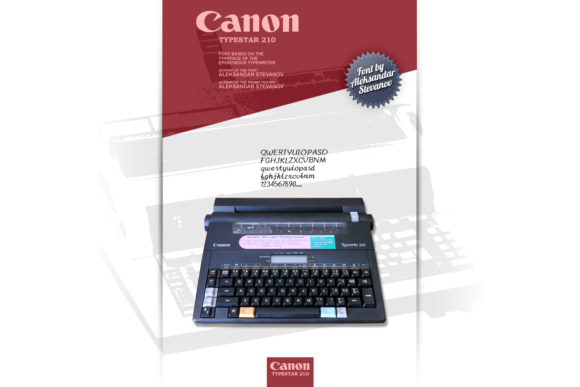
Canon TypeStar 210 is a retro handwritten font that digitally recreates the distinctive typeface from Canon's iconic TypeStar 210 portable typewriter, popular in the late 1970s and early 1980s. Unlike modern fonts that strive for mathematical perfection, this font embraces the charming irregularities of mechanical type: slight variations in letter spacing, subtle ink spread, and the gentle unevenness that comes from physical keys striking paper.
The original Canon TypeStar 210 was known for its compact design and reliable performance. It produced a clean yet characterful impression that fell somewhere between formal business correspondence and personal handwriting. Today's digital revival preserves that duality. The font is neither fully script nor entirely block; it inhabits a middle ground that feels both intentional and human. Each character carries a slight tilt, and the weight distribution feels organic rather than algorithmic.
For professionals who grew up typing on such machines, using the Canon TypeStar 210 font evokes a sense of familiarity and nostalgia. For younger audiences, it offers a glimpse into a slower, more deliberate form of communication. This cross-generational appeal is one of the key reasons the font is gaining traction across industries.
The Broader Trend: Analog Nostalgia in a Digital World
The rising interest in Canon TypeStar 210 is not an isolated phenomenon. It sits within a larger cultural and market trend toward analog nostalgia. From the resurgence of vinyl records to the popularity of film photography and bullet journals, consumers are actively seeking experiences and aesthetics that feel tangible and imperfect. This trend is especially pronounced among creators and entrepreneurs who understand that digital perfection can sometimes feel cold or impersonal.
In typography, this manifests as a growing preference for fonts that look handcrafted. Brands are moving away from sterile sans-serif designs and toward typefaces that carry history and personality. Canon TypeStar 210 fits perfectly into this shift. It offers the warmth of handwriting with the structure of a typeface, making it suitable for everything from logo design to editorial layouts.
The broader creative industry is also responding to this trend. Design software now includes features that simulate organic textures and press effects. Font foundries are releasing entire collections inspired by vintage typewriters. Marketing campaigns increasingly use imperfect typography to signal authenticity and approachability. In this context, Canon TypeStar 210 is not just a font; it is a strategic choice for professionals who want their communication to feel human in a machine-driven world.
Why Creators and Professionals Are Paying Attention
So why are entrepreneurs, freelancers, and marketers specifically gravitating toward Canon TypeStar 210? The answer lies in changing audience expectations. Consumers today are more visually literate than ever. They can distinguish between a generic template and a thoughtfully designed message. They crave authenticity, and they reward brands that demonstrate it.
For a small business owner or solo entrepreneur, using a font like Canon TypeStar 210 in a newsletter or social media graphic immediately sets the tone. It says: "This is personal. This is not automated. A human wrote this." In a marketplace where inboxes are flooded with algorithm-generated content, that human touch is a competitive advantage.
Marketers, too, are paying attention because Canon TypeStar 210 aligns with the growing preference for storytelling over salesmanship. Fonts carry emotional weight. A handwritten-style typeface can make a brand appear more vulnerable, more relatable, and more trustworthy. This is particularly valuable for businesses in lifestyle, wellness, creative services, and artisanal products, where personality often trumps polish.
Even in B2B contexts, the font is finding use. Internal communications, proposal cover pages, and brand guidelines are sometimes incorporating Canon TypeStar 210 to add a layer of humanity to otherwise formal documents. The font can serve as a visual cue that the message behind the words is genuine.
Practical Applications and Observations
One of the most practical uses of Canon TypeStar 210 is in content marketing and digital media. Blog headers, quote cards, and newsletter titles set in this font immediately break the monotony of standard web typography. When paired with clean, modern body fonts, it creates a visual hierarchy that feels curated rather than templated.
Another common application is in branding for small businesses and side projects. A freelancer offering copywriting services, for instance, might use Canon TypeStar 210 in their logo to signal a personal, one-on-one approach. A ceramicist selling handmade goods might use the font on product labels to reinforce the handcrafted nature of their work. In both cases, the font reinforces the brand promise without a single explanatory word.
In presentation design, using Canon TypeStar 210 for key takeaways or callout quotes can make a deck feel less corporate and more conversational. This is particularly effective for pitches to smaller, relationship-focused clients or for internal team meetings where the goal is engagement rather than authority.
We have also observed the font appearing in physical-digital hybrid experiences. A restaurant menu displayed on a tablet might use Canon TypeStar 210 to evoke a chalkboard or handwritten specials board. A wedding website might use it for the narrative sections to feel like a personal invitation. The common thread is intentionality: the font is chosen not because it is trendy, but because it fits the emotional tone of the message.
Changing Workflows and Expectations
The growing interest in Canon TypeStar 210 also reflects a shift in how professionals approach their workflows. There is a growing recognition that speed is not the only metric of effectiveness. In an age of instant messaging and rapid-fire content, taking a moment to choose a font that requires thought and care is itself a statement.
This is especially relevant for freelancers and independent creators who must differentiate themselves in crowded markets. Using a distinctive font like Canon TypeStar 210 in proposals, invoices, or client communications can leave a lasting impression. It signals that the creator pays attention to details, that they value craft, and that they are willing to invest time in presentation.
For larger organizations, incorporating Canon TypeStar 210 into specific brand touchpoints can signal a cultural shift toward more authentic, human-centered communication. This aligns with larger developments in brand purpose and corporate authenticity. Companies that can balance professionalism with personality are better equipped to build trust with modern audiences.
The technology landscape also supports this shift. Modern font rendering and high-resolution displays mean that even subtle textures and irregularities print beautifully across formats. Variable font technology and OpenType features allow for contextual alternates and ligatures that mimic the natural variation of typewritten text. The infrastructure now exists to use historically inspired fonts without sacrificing legibility or performance.
Connecting to Larger Developments
The relevance of Canon TypeStar 210 extends beyond design trends. It is part of a larger cultural conversation about slowness, intentionality, and the value of analog experiences in a digital-first world. As artificial intelligence and automation take over more tasks, the things that remain distinctly human—imperfection, emotion, tactile memory—become more valuable.
In this sense, choosing to use a retro handwritten font is a small but meaningful act of resistance against homogeneity. It is a declaration that communication is not just about transmitting information, but about creating an experience. It acknowledges that how something looks influences how it is received, and that form and function are inseparable.
For content creators and entrepreneurs, this has practical implications. The fonts you choose are part of your brand's visual language. They communicate values, set expectations, and shape perceptions. By selecting a font like Canon TypeStar 210, you are aligning yourself with a set of values: craftsmanship, history, authenticity, and human connection. This alignment matters in a marketplace where consumers are increasingly making decisions based on shared values rather than product features alone.
For marketers, the font offers a tool for cutting through digital noise. When every brand is chasing the same sleek, modern aesthetic, choosing something with a distinctly analog character can be a strategic differentiator. It suggests that the brand is confident enough to not try too hard to look perfect, and that confidence can be attractive.
Ultimately, the conversation around Canon TypeStar 210 is really a conversation about what we value in our communication. As professionals, we are constantly making choices about how to present ourselves. Every font, every color, every layout sends a signal. Choosing a font with history and personality signals that we care about the details, that we respect our audience's visual intelligence, and that we are willing to stand out—even if it means being a little imperfect.
That imperfection, captured so well in the Canon TypeStar 210 font, is not a flaw. It is a feature. In a world of AI-generated everything, the human hand—or the echo of it—has never been more valuable.