Why Cheston Stands Out as a Modern Slab Serif Typeface
Typography is the quiet backbone of design. When you choose a typeface, you are not just picking letters—you are setting a mood, establishing credibility, and guiding how readers experience your message. Among the many options available today, Cheston has emerged as a beautifully constructed slab serif font that balances classic structure with modern versatility. With five distinct weights and styles, Cheston offers a rare combination of simplicity, range, and refined elegance. In this article, we will explore what makes Cheston unique, how slab serif fonts fit into contemporary design, and why this typeface deserves a spot in your toolkit.
Understanding Slab Serif Fonts: A Quick Foundation
Before diving into Cheston itself, it helps to understand the category it belongs to. Slab serif typefaces—sometimes called Egyptian or mechanistic—are characterized by thick, block-like serifs attached to the ends of letter strokes. Unlike the delicate, bracketed serifs of traditional book fonts such as Garamond or Times New Roman, slab serifs feel sturdy, assertive, and highly readable.
Historically, slab serifs emerged in the early 19th century during the Industrial Revolution. They were used for posters, advertisements, and signage because they could withstand poor printing conditions and still remain legible from a distance. Today, slab serifs have been reimagined for digital screens, brand identities, editorial layouts, and user interfaces. They convey confidence, warmth, and a touch of nostalgia—without feeling outdated.
Cheston belongs to this proud lineage, but it updates the formula with cleaner proportions, softer curves, and a full spectrum of weights that make it suitable for both display and body text.
Cheston at a Glance: A Typeface Built for Flexibility
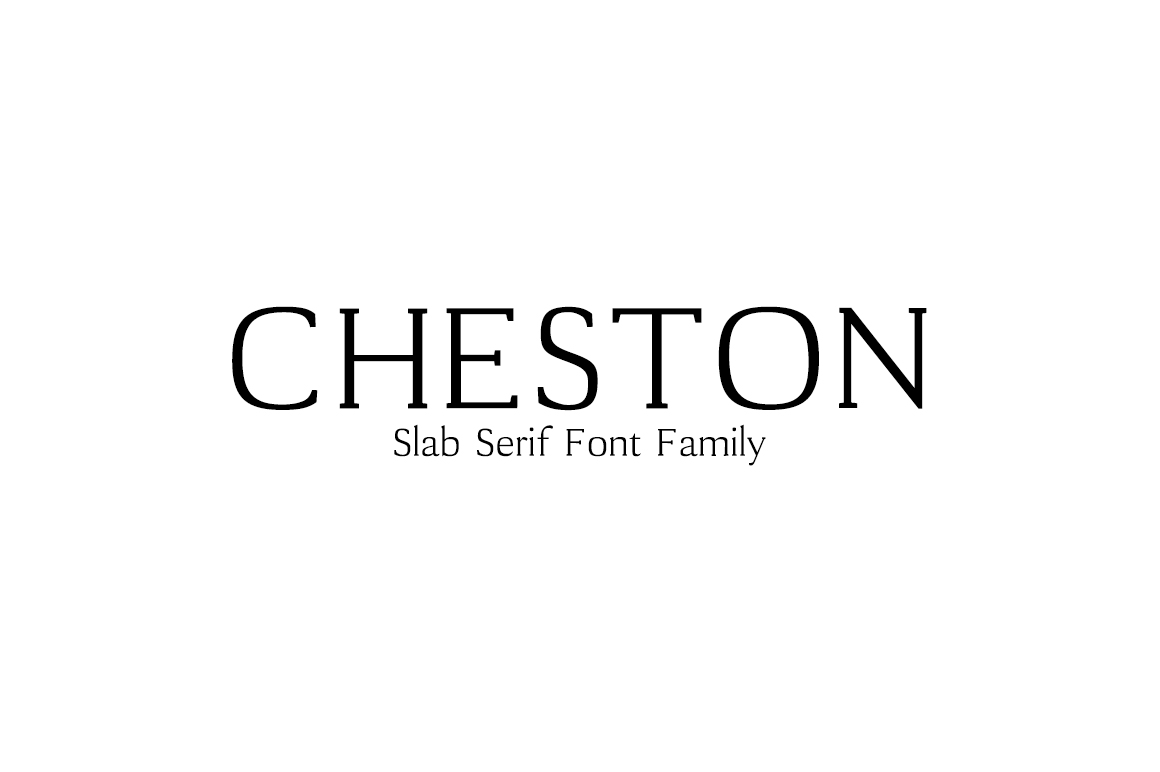
Cheston is described as a beautiful and modern slab serif that offers five different weights and styles. This range gives designers and content creators a large typographic palette to work with. Whether you are designing a magazine spread, a corporate report, or a personal blog, Cheston can adapt without losing its character.
The five available styles typically include:
- Light – delicate and airy, ideal for large headings or captions
- Regular – balanced and versatile, perfect for body text in print or digital
- Medium – adds presence without overwhelming, good for subheadings
- Bold – strong and assertive, suited for highlights and accents
- Extra Bold – commanding and dramatic, excellent for headlines or hero sections
Each weight has been carefully drawn to maintain consistent letter shapes, proportions, and spacing across the family. This means you can mix weights freely within a project and the text will feel cohesive—not like you are jumping between different fonts.
Why Weight and Style Variety Matters in Typography
One of the most common misunderstandings about typography is that a single font can do everything. In reality, great design almost always calls for hierarchical variation. A headline needs to grab attention. A subheading needs to guide the reader. Body copy needs to be comfortable to read for extended periods. A caption needs to be unobtrusive but clear.
When a typeface offers multiple weights—like Cheston does—you can create this hierarchy using one coherent family. This avoids the visual chaos of pairing unrelated fonts that clash in mood or proportion. It also simplifies your workflow because you don’t have to spend hours testing font combinations.
For example, imagine you are designing a brand booklet. With Cheston, you could use the Extra Bold weight for the cover title, Bold for chapter headings, Medium for pull quotes, Regular for body paragraphs, and Light for page numbers or image credits. The entire document would feel unified, professional, and intentionally designed.
The Aesthetic Appeal of Cheston: Simple, Classic, and Modern
Cheston’s visual character sits at the intersection of simple and classic. It does not rely on extreme geometric shapes or decorative flourishes. Instead, it finds beauty in carefully balanced proportions, consistent stroke widths, and a gentle warmth that invites reading.
Compared to earlier slab serifs like Rockwell or Courier, Cheston feels less rigid. Its curves are slightly softer, its serifs are less blocky, and its overall silhouette is more refined. This makes it approachable for contemporary projects that need personality without shouting.
At the same time, Cheston is not trying to be a trendy, short-lived font. Its classic foundation means it will age well. Whether you use it for a tech startup landing page, a law firm’s website, or a lifestyle magazine, Cheston brings a timeless quality that feels both current and lasting.
Practical Applications: Where Cheston Shines
Thanks to its range of weights and balanced design, Cheston works well across many contexts. Here are some of the most natural use cases:
Brand Identity and Logos
A slab serif font communicates stability and reliability. Cheston’s clean lines make it a strong candidate for logos and brand marks—especially when you want to appear approachable but professional. The Medium or Bold weights are often perfect for wordmarks, while the Light weight can be used for taglines or secondary text.
Editorial and Print Design
Magazines, brochures, reports, and books benefit from Cheston’s readability. Its Regular weight is comfortable for long-form reading, while the Extra Bold weight can create dramatic titles that draw the eye. Because the family is so coherent, you can design an entire publication using only Cheston and still achieve visual interest.
Web and Digital Interfaces
On screens, slab serifs can sometimes feel heavy. But Cheston has been drawn with digital use in mind. Its moderate contrast and open letterforms keep it legible at smaller sizes, and its range of weights allows you to adapt it for buttons, menus, banners, and body text. The Light weight works well for large hero headings, while the Regular and Medium weights are comfortable for reading on mobile devices.
Educational and Instructional Materials
Clarity is critical in textbooks, worksheets, manuals, and online courses. Cheston’s straightforward design reduces visual noise, helping learners focus on content rather than decoration. The Bold weight can be used to emphasize key terms, and the Regular weight ensures smooth reading for paragraphs.
Creative and Personal Projects
Because Cheston is both beautiful and flexible, it is also an excellent choice for invitations, posters, portfolios, social media graphics, and personal blogs. Its modern slab character gives your work a distinctive voice that stands out from the crowd of generic sans-serif fonts.
Common Misunderstandings About Slab Serif Fonts
Despite their many strengths, slab serif fonts are sometimes overlooked or misunderstood. Let us clear up a few common assumptions:
- "Slab serifs are only for posters and headlines." While it is true that older slab serifs were designed for large sizes, modern typefaces like Cheston include lighter weights and careful spacing that make them fully functional for body text. The Light and Regular weights are proof that slab serifs can be subtle and readable at small sizes.
- "Slab serifs feel old-fashioned." Some slab serifs do carry a retro or industrial vibe, but Cheston’s clean proportions and contemporary detailing make it feel fresh and current. It is a slab serif for the modern era.
- "You cannot mix slab serifs with other fonts." Actually, slab serifs pair beautifully with humanist sans-serifs, geometric sans-serifs, and even calligraphic scripts. Cheston’s neutral warmth makes it an excellent partner for a wide range of type families. The key is to choose a companion font that contrasts in structure while sharing similar proportions.
- "More weights mean more complexity." The opposite is true. Having five weights simplifies your design decisions because you can stay within one family. You avoid the risky guesswork of matching fonts from different foundries.
How Cheston Fits Into Modern Life and Work
Typography is not just for designers. Anyone who creates documents, presentations, websites, or marketing materials can benefit from understanding and using good typefaces. Cheston’s availability across five weights means that a business owner can use it for their logo, their website, their product packaging, and their internal reports—creating a consistent brand experience without hiring a specialist.
For educators and students, Cheston’s clarity can improve the readability of handouts, slides, and digital course materials. For creative professionals, it offers a reliable tool that performs well across print and screen. And for everyday users—someone creating a resume, a wedding invitation, or a family newsletter—Cheston gives them access to a level of typographic quality that was once reserved for professional studios.
In an age where communication happens mostly through screens, choosing a typeface that is both legible and expressive has never been more important. Cheston answers that need with simplicity and grace.
Tips for Using Cheston Effectively
To get the most out of Cheston, consider these practical suggestions:
- Start with the Regular weight for body text and use heavier weights for hierarchy. This creates a natural reading flow.
- Use the Light weight for large, airy headings where you want to make a statement without feeling heavy.
- Avoid using too many different weights in a single page or spread. Stick to two or three weights to maintain clarity and cohesion.
- Pair Cheston with a complementary sans-serif such as a geometric or humanist style for contrast in digital interfaces.
- Test Cheston at different sizes to appreciate how its proportions shift. What looks good in a heading may feel different in a caption.
Conclusion: A Typeface That Delivers on Its Promise
Cheston is more than just a slab serif font—it is a thoughtfully designed tool that gives you the freedom to express hierarchy, tone, and personality within a single family. Its five weights and styles provide a range of typographic options that cater to beginners and experienced designers alike. By blending classic structure with modern refinement, Cheston earns its place in the growing landscape of contemporary typefaces.
Whether you are working on a brand identity, a publication, a website, or a personal project, Cheston offers the clarity, warmth, and versatility you need. It is a font that does not try to do everything—but it does what it sets out to do exceptionally well. And in a world full of typographic noise, that kind of purposeful design is always worth celebrating.