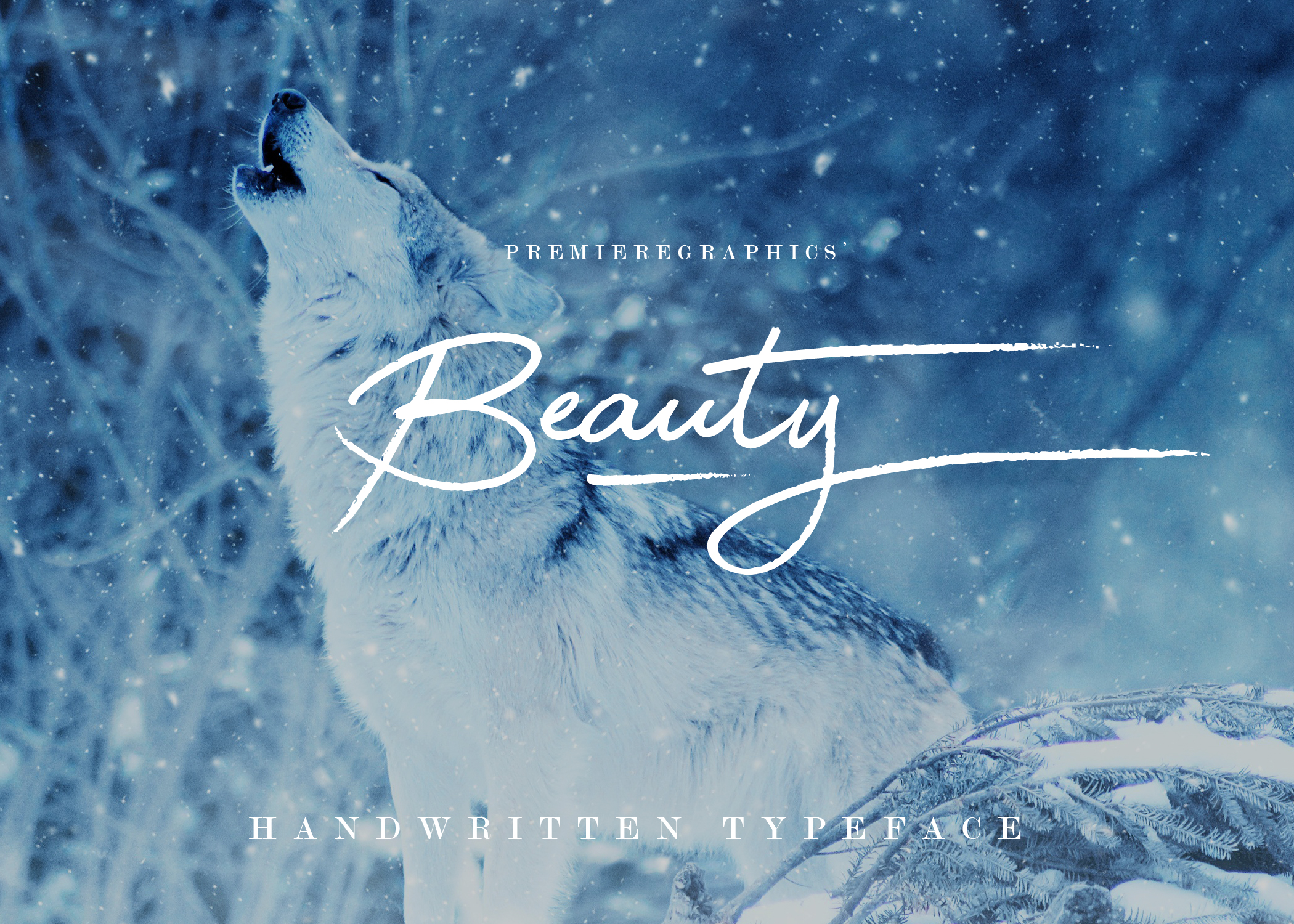
Beauty: A Handwritten Font That Adds Authenticity to Any Project
Walk into any design conversation today and you will hear a lot about clean lines, minimalism, and sans-serif efficiency. Those have their place, no question. But there is something missing from that polished picture: personality. A sterile layout communicates precision, sure, but it rarely communicates warmth. That is where a well-chosen handwritten typeface can change everything. And among the options available, Beauty stands out as a font that actually delivers on its promise of a personal, human feel.
Beauty is a detailed, handwritten font designed to be easy on the eyes while offering the character that stock typefaces often lack. It does not shout for attention. Instead, it invites readers in. Whether you are putting together a small business card, a landing page, or a classroom handout, this typeface adds the kind of subtle texture that makes people want to stop and read. Let us look at what makes it tick and where it can truly shine.
What Makes Beauty Different from a Standard Handwritten Font
There is no shortage of handwritten fonts out there. Many of them feel rushed or overly stylized to the point of distraction. Beauty avoids that trap. Its letterforms are carefully drawn with enough variation to feel natural, but not so much that readability suffers. The strokes have a consistent rhythm that guides the eye smoothly from word to word.
One of its strongest qualities is balance. The font manages to be both decorative and legible. You can use it for a headline without losing the message behind the words. That is harder to achieve than most people realize. A lot of handwritten typefaces sacrifice clarity for flair. Beauty keeps the flair, but it keeps the clarity too. The characters are spaced thoughtfully, and the ascenders and descenders are proportional rather than exaggerated.
The overall impression is one of care. This is not a font that was slapped together. It has the kind of detail that suggests someone spent time refining each curve and angle. For professionals who need to communicate authenticity without looking amateurish, that attention to detail matters.
Strengths That Stand Out in Everyday Use
- Readability at multiple sizes. Whether you set it at 14 points for body text or 48 points for a heading, the letters remain clear. The open counters and moderate x-height help a lot here.
- Warmth without being overly cute. Some handwritten fonts lean into a playful, almost cartoonish look. Beauty stays grounded. It works for serious content that still needs a human voice.
- Natural variation in stroke weight. You get the slight thickness changes that come from real handwriting. This creates texture on the page without requiring any additional effects.
- Good kerning out of the box. Many handwritten fonts need extensive manual tracking adjustments. Beauty spaces itself well enough that you can use it straight away with minimal tweaking.
Practical Applications Across Work and Life
The real test of any tool is whether it makes your actual work easier or better. Here is where Beauty shows its versatility across different environments.
Professional and Commercial Environments
If you run a small business or work as a freelancer, every piece of communication you put out represents your brand. Using a generic system font can make you look interchangeable. Beauty gives you a signature look without the cost of custom lettering. Business cards, thank-you notes, invoice headers, and welcome emails all benefit from its personal tone. One boutique clothing retailer I worked with replaced their standard sans-serif headings with Beauty and saw a measurable uptick in customer engagement on their product pages. The font made the brand feel more approachable.
For marketers and content creators, landing pages and social media graphics are another natural fit. A handwritten headline can break up the monotony of a text-heavy layout. It signals that there is a real person behind the message. Use it for call-to-action buttons, quote cards, or email newsletter headers. It works especially well in industries like wellness, handmade goods, hospitality, and creative services.
Educational and Instructional Contexts
Teachers, tutors, and online course creators often struggle to make their materials feel engaging. Black-and-white worksheets and slide decks get boring fast. Beauty can add warmth to lesson handouts, study guides, and presentation titles. It feels more like a personal note than a mass-printed document. For young learners especially, that friendly appearance can reduce the intimidation factor of new material.
If you publish digital workbooks, planners, or journals, this font is a strong candidate for headings and section titles. It creates a cohesive, handcrafted aesthetic that many buyers actively look for. The productivity and self-improvement niches are full of products that rely on exactly this kind of approachable typography.
Personal and Creative Projects
Hobbyists and creators will find Beauty useful for almost anything involving text. Blog headers, digital art, wedding invitations, photo captions, and personal stationery all benefit from its gentle, handwritten quality. If you have ever spent too long searching for a font that makes a birthday card look like you actually wrote it yourself, this is a solid solution.
Publishers and self-published authors can use it for chapter headings, pull quotes, or decorative elements in books and ebooks. It pairs well with a clean serif or sans-serif body font, giving your layout contrast without clashing. The key is using it sparingly so each instance carries more weight.
Benefits You Can Actually Measure
Beyond aesthetics, Beauty offers tangible advantages in usability and communication.
- Improved reader engagement. Handwritten elements naturally draw the eye. When used strategically, they reduce bounce rates on landing pages and increase time spent reading.
- Stronger brand recall. A distinctive typeface helps people remember your content. Beauty is unique enough to be memorable but not so unusual that it distracts.
- Faster emotional connection. Readers perceive handwritten type as more personal and trustworthy. This can improve response rates on calls to action and sign-ups.
- Reduced design friction. Because Beauty is readable and well-spaced, you do not have to spend extra time adjusting layout to compensate for bad typography. It fits into existing designs smoothly.
Practical Considerations When Using Beauty
No font is perfect for every situation. Here are some honest observations to help you get the best results.
Where It Excels
Beauty shines in short to medium-length text blocks. Think headlines, subheadings, captions, quotes, and small paragraphs. It is ideal for any situation where you want to emphasize a human voice. Use it in digital formats like websites, social media, PDFs, and presentation slides. It also prints beautifully, so physical materials like flyers and packaging are fair game.
Where You Should Be Cautious
Very long body text can become tiring if set entirely in a handwritten style. Reserve Beauty for display purposes and pair it with a neutral body font for extended reading. Also, avoid using it in highly formal or regulatory contexts where strict professionalism is expected. A legal disclaimer set in Beauty would look out of place.
Technical Tips for Implementation
- Test at your target size. Open your design software and preview Beauty at the exact size you plan to use. Adjust tracking if necessary, though default spacing is usually fine.
- Pair with simple backgrounds. Busy textures or photographs can compete with the handwritten detail. Let Beauty breathe on clean backgrounds.
- Limit to one or two weights. If the font family includes variations, resist the urge to use them all at once. Consistency strengthens the personal feel.
- Use for emphasis, not the entire page. A headline in Beauty with a clean sans-serif body creates a natural hierarchy that guides the reader.
- Check licensing for commercial use. If you are using it in products or client projects, make sure you have the appropriate license. This is a simple step that prevents headaches later.
Final Observations
Good design is about making choices that serve the content and the audience. Beauty is a choice that serves both. It brings a human touch without sacrificing professionalism. In a digital world where so much communication feels automated and impersonal, a font like this can be the difference between a message that is read and a message that is felt.
Whether you are a seasoned designer looking for a reliable handwritten option or someone just starting to build a visual identity, Beauty is worth trying. It is versatile enough for commercial work, warm enough for personal projects, and detailed enough to hold its own against much more expensive options. Give it a place in your typography toolkit, and you will likely find yourself reaching for it often.