Moolrys: A Playful Sans Serif with Handwritten Charm
Every designer, marketer, or small business owner knows the struggle of finding a font that feels both friendly and credible. You want something that doesn't shout for attention but still brings warmth to your message. That's exactly where Moolrys steps in. It's a cute handwriting sans serif font that manages to be whimsical without losing its footing. Think of it as that reliable team member who also knows how to crack a good joke at the right moment.
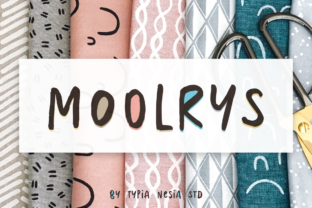
Moolrys blends the clean structure of a sans serif with the loose, organic feel of hand lettering. The result is a typeface that feels relaxed, approachable, and surprisingly versatile. It doesn't try to be trendy or loud—it just works, and that's rare.
What Makes Moolrys Stand Out?
At first glance, Moolrys looks like something you'd scribble in a notebook during a sunny afternoon coffee break. But look closer, and you'll notice deliberate choices that give it staying power. The letterforms are rounded, with slightly uneven stroke weights that mimic natural handwriting. This inconsistency is what makes it feel human rather than mechanical.
The sans serif font foundation keeps things legible, while the handwritten touches add personality. It's not overly decorative—no dramatic flourishes or exaggerated swashes. Instead, Moolrys relies on subtle quirks: a slightly tilted baseline here, a playful loop there. This restraint means it can handle serious projects without feeling childish, and playful ones without feeling forced.
For designers working on modern typography projects, Moolrys fills a gap between rigid geometric sans serifs and overly ornate script fonts. It's a display font that knows when to step back and when to take center stage.
Where Moolrys Shines in Real Projects
You'll find Moolrys most effective in contexts where you want to build a connection with your audience. Here are a few places where it truly excels:
- Logo design and brand identity. Moolrys works especially well for small businesses, freelancers, and creative studios that want to project a friendly, trustworthy image. It feels handmade without looking amateur. A bakery, a children's book author, or a boutique stationery shop would all benefit from its gentle personality.
- Social media graphics and web design. In a crowded feed, Moolrys stands out without screaming. It's legible at smaller sizes on mobile screens, and its relaxed vibe fits Instagram stories, Pinterest pins, and blog headers. Use it for short quotes, announcements, or call-to-action overlays.
- Editorial and packaging design. For product packaging, especially in the food, beauty, or lifestyle categories, Moolrys conveys a sense of care and craftsmanship. It pairs nicely with clean serif fonts for contrast. Imagine a natural skincare line with Moolrys on the front label and a classic serif for ingredient lists—that's a winning combo.
- Print materials for events and invitations. Wedding invites, birthday cards, or save-the-dates benefit from Moolrys' handwritten feel. It brings a personal touch to print without the cost of actual calligraphy.
Web design is another strong suit. Because Moolrys is a premium font designed with clarity in mind, it holds up well on both desktop and mobile. Use it for headings, hero text, or short navigation labels where you want to inject warmth.
How Moolrys Affects Readability and Brand Perception
Typography isn't just about looking good—it shapes how your audience feels about your brand. Moolrys' handwritten quality signals authenticity. In an era of polished, sometimes cold digital design, a handwritten font like this one can make your message feel more genuine and approachable.
Readability is surprisingly strong for a display font. Because it's a sans serif font, the letterforms are clear and open. There's no heavy ornamentation to confuse the eye. I've tested it in headlines and short paragraphs, and it holds up well at 16px and above. For longer body text, you'd still want a more neutral typeface, but Moolrys is perfect for pull quotes, subheadings, and highlight text.
From a brand perception standpoint, Moolrys leans into the "human" side of your identity. It suggests that your business is approachable, creative, and not afraid to show a little personality. For a commercial font, it strikes a strong balance between professionalism and charm. It won't work for a law firm's annual report, but it could be a great fit for a lifestyle blog, a handmade goods shop, or a creative agency's internal communications.
Practical Tips for Using Moolrys Effectively
Getting the most out of Moolrys means thinking about context and pairing. Here are some observations from using it in real projects:
- Pair it with neutral companions. Moolrys is already expressive, so pair it with a clean, simple serif font or a straightforward sans serif for body text. For example, a classic like Merriweather or a modern like Work Sans works beautifully. This creates visual hierarchy without clashing.
- Watch your spacing. Because Moolrys has a handwritten feel, you may need to adjust tracking (letter spacing) for certain uses. In all-caps settings, a little extra space can improve readability. In shorter headlines, the default spacing often works perfectly.
- Use it for emphasis, not everything. Moolrys is a creative font that deserves the spotlight. Reserve it for headings, logos, accent text, and short bursts of copy. Overusing it can make your design feel chaotic.
- Consider color and background. The font's organic lines shine best on clean, light backgrounds. Dark or overly busy backgrounds can distract from its details. Muted pastels, white, and light gray all let Moolrys breathe.
When evaluating whether Moolrys is right for a project, ask yourself: Does this design need a human touch? If the answer is yes, you're likely on the right track.
Choosing Moolrys for Your Next Project
Found a use case? Great. Now let's talk about practical next steps. When you're ready to bring Moolrys into your toolkit, here's what to look for:
- Review the included styles and glyphs. Some premium fonts offer a range of weights, alternates, and multilingual support. Check that Moolrys includes the punctuation and special characters your project needs. For example, if you're designing in Spanish or French, confirm accented letters are covered.
- Test font pairings early. Before committing, drop Moolrys into a mockup with your planned body font. See how they interact at different sizes. A quick test saves headaches later.
- Understand commercial licensing. Moolrys is a commercial font, so when you buy it, you're paying for the right to use it in client work, products, or brand assets. Always read the license terms. Some fonts restrict use in logos or editable templates. Make sure your intended use is covered.
- Use it as a design asset, not a crutch. No font alone makes a design great. Moolrys is a tool. Pair it with solid composition, thoughtful color choices, and clear messaging. It will elevate your work, but it won't save a weak concept.
For logo design specifically, I recommend testing Moolrys in both horizontal and stacked arrangements. Its organic shape can adapt to either layout, but one may suit your brand mark better than the other. Print a few versions and hold them up—see how they feel in the physical world.
Real-World Examples Worth Trying
If you're brainstorming where to use Moolrys next, here are a few scenarios that have worked well for me and other designers I've collaborated with:
- A children's book cover. Moolrys on the title paired with a readable serif for the author name. The result felt warm and inviting without being too childish.
- A monthly newsletter masthead. Using Moolrys for the publication name gave it a personal, almost handmade feel that subscribers responded to. Open rates actually improved after the redesign.
- A product label for a small-batch hot sauce. The handwritten quality of Moolrys conveyed the small-batch, artisanal nature of the product. It stood out on shelves next to bigger brands using mechanical fonts.
- A wedding invitation suite. Moolrys for the couple's names, a clean sans serif for details. It struck the right note between romantic and modern.
These examples show that Moolrys isn't limited to one industry or style. Its flexibility comes from its balanced personality—handwritten but legible, friendly but credible.
Final Thoughts on Adding Moolrys to Your Workflow
Typography choices often come down to a simple question: does this font help me say what I need to say? With Moolrys, the answer is usually yes, especially when your message requires warmth, authenticity, and a touch of whimsy. It's not a font that disappears into the background—it adds texture and emotion to your designs.
Whether you're a blogger looking for a signature headline style, a small business owner designing your own marketing materials, or a seasoned creative professional searching for a fresh display font option, Moolrys is worth exploring. It's one of those rare design assets that feels both new and familiar, like a classic you're just discovering.
Test it in a few projects. See how it changes the tone of your work. You might find that Moolrys becomes the friendly voice your brand has been looking for.