Amithen: A Textured Brush Font with Contemporary Appeal
Typography can make or break a project. You might have the perfect color palette, a strong layout, and compelling copy, but if the typeface feels off, the whole piece falls flat. That is where Amithen enters the picture. This textured brush font takes a deliberately contemporary approach to design while retaining the organic warmth that only a handmade tool can deliver. The irregular baseline gives it a natural, unpolished rhythm that feels refreshingly human in a world of overly perfect digital type.
If you have been searching for a display font that balances character with legibility, Amithen deserves a close look. It is not trying to be a workhorse text face for long paragraphs. Instead, it shines when you need personality, movement, and a tactile quality that draws people in.
What Makes Amithen Stand Out Visually
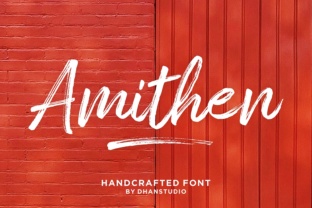
At first glance, Amithen reads like a confident brush stroke captured in digital form. The letterforms carry subtle texture variations that mimic real ink on paper, giving each character a slight unpredictability. The irregular baseline is not a flaw—it is a deliberate design choice that adds a hand-drawn, spontaneous feel. This makes the font feel alive rather than mechanically generated.
The stroke contrast is moderate, with enough variation to create visual interest without sacrificing readability at display sizes. Terminals are often slightly tapered, as if the brush lifted naturally at the end of each stroke. The overall personality sits somewhere between refined and raw, making it versatile enough for both edgy and elegant applications.
Unlike many script or handwritten fonts that lean heavily into a single mood, Amithen strikes a balance. It can feel playful in short bursts, serious when set in all caps, and warm when used for headlines or quotes. That flexibility is rare in a brush font and is one of its strongest selling points for creative professionals.
Where Amithen Works Best Across Projects
Because Amithen is designed as a display font, it performs best when given room to breathe. Small sizes below 18 points may lose some of the texture detail, but anywhere from 24 points upward, the character really comes through. Here are some of the most effective use cases I have seen and tested.
Brand Identity and Logo Design
For small businesses, startups, or personal brands that want to communicate authenticity, Amithen works beautifully in logo marks. The irregular baseline prevents the logo from feeling sterile. A coffee shop, a handmade goods store, or a creative consultancy could all benefit from the font's handcrafted feel. When paired with a clean sans serif for supporting text, the contrast creates a strong visual hierarchy that feels both professional and approachable.
One practical recommendation: use Amithen in all caps for a logo wordmark. The uppercase forms tend to have more consistent weight distribution while retaining the brush texture. This maintains readability at smaller sizes, such as on business cards or social media avatars.
Editorial and Publishing Design
Magazine covers, article headers, pull quotes, and section dividers are natural homes for Amithen. The font adds a human touch to editorial layouts that might otherwise feel too rigid. I have seen it used effectively in lifestyle publications, art journals, and even music zines. The key is to keep surrounding elements simple—let Amithen carry the visual weight while supporting text remains neutral.
For book covers, particularly in the creative nonfiction, memoir, or self-help genres, Amithen can signal warmth and personal storytelling. The handwritten quality suggests a real voice behind the words.
Packaging and Product Design
Packaging is one of the most competitive spaces in design. A font that communicates handmade quality can be a huge advantage. Amithen works well on product labels, subscription box inserts, and specialty food packaging. The texture reads as artisanal without trying too hard. For small-batch producers or indie brands, this typeface helps tell a story of craftsmanship.
Consider using Amithen for the product name or hero phrase on packaging, then pairing it with a simple serif or sans serif for ingredients, instructions, or provenance details. That combination respects both the visual impact and the need for clarity.
Social Media Graphics and Web Design
Social media feeds are flooded with generic type. Amithen cuts through that noise. Used in Instagram story titles, YouTube thumbnails, or Pinterest pins, the font adds a distinctive voice. It pairs well with bold imagery and can anchor a post's visual hierarchy quickly. Because the font's texture reads well on screens, it remains effective even when scaled down for mobile viewing.
For web design, Amithen is best reserved for hero headers, navigation highlights, or call-to-action buttons. Avoid using it for body copy or long passages, as the irregular baseline can become fatiguing to read in paragraphs. Reserve it for moments where you need to stop the scroll.
How Amithen Influences Readability and Visual Hierarchy
Readability in a display font is different from readability in a text font. With Amithen, the goal is not sustained reading but instant impact. The irregular baseline actually helps with visual hierarchy because it creates a natural focal point. When a headline uses Amithen, the eye is drawn to that imperfection, that humanness. It signals that this text is important, emotional, or worth pausing over.
In brand perception terms, a font like Amithen communicates confidence. It says, "We do not need to look perfectly machine-made to be taken seriously." This resonates strongly with modern audiences who value authenticity and transparency. For entrepreneurs and small business owners, that emotional cue can be more valuable than a dozen bullet points about quality.
Consistency matters too. When Amithen is used consistently across touchpoints—website headers, social media graphics, packaging, business cards—it builds recognition. The font becomes part of the brand's visual signature. Over time, audiences associate that brush stroke texture with the brand's personality and values.
Practical Guidance for Choosing and Using Amithen
Before committing to Amithen for a project, take time to evaluate fit. Ask yourself: Does this project benefit from a handmade, textured look? Is the audience likely to respond to something that feels less corporate and more human? If the answer is yes, Amithen is worth testing.
Start by downloading the font and reviewing all included styles. Check whether the family offers multiple weights or alternates. Many premium brush fonts include ligatures, swashes, or stylistic alternates that can help you avoid repeating the same letterform too often. If Amithen provides these, use them selectively to keep the text dynamic.
Testing Font Pairings
One of the most effective ways to evaluate Amithen is to pair it with another typeface. Here are a few pairings worth testing:
- Amithen + a clean geometric sans serif: This creates a modern, high-contrast look that works well for branding and editorial headers. The sans serif grounds the visual chaos of the brush strokes.
- Amithen + a classic serif: For a more traditional or sophisticated feel, pair the brush font with a serif face. The serif adds structure and gravitas, while Amithen brings warmth.
- Amithen + a minimalist script: This can work for feminine or artistic brands, but be careful not to overdo the handwriting effect. Use Amithen for the main headline and a simpler script for accents.
Always test pairings at actual usage sizes. A pairing that looks great on a poster might feel cluttered on a mobile screen. Print out your tests if possible—texture often reads differently on paper than on screen.
Readability Considerations
Because Amithen has an irregular baseline and texture, avoid setting it in all lowercase for extended phrases. Mixed case or title case tends to be more legible. Also, watch the tracking (letter spacing) closely. Brush fonts often need a little extra space between letters to prevent the texture from feeling muddy, especially at smaller sizes.
If you are using Amithen on a dark background, test the contrast carefully. The texture can sometimes get lost against busy or dark imagery. A subtle drop shadow or a light background block behind the text can solve this without diluting the handmade effect.
Commercial Licensing and What to Look For
Before using Amithen in any commercial project, check the license terms carefully. Premium fonts often distinguish between personal use, commercial use, and extended licensing for things like merchandise, broadcast, or webfont embedding. If you are a designer purchasing for a client, make sure the license covers that client's specific use case. For small business owners, a standard commercial license typically covers logos, packaging, and marketing materials, but it is always worth reading the fine print.
If you are a content creator or hobbyist selling digital products like printables, templates, or social media assets, confirm that the license allows redistribution in that format. Some licenses restrict embedding fonts in editable templates, so pay attention to those details.
Real-World Examples and Observations
I have seen Amithen used effectively in a rebrand for a small-batch hot sauce company. The client wanted to move away from a generic sans serif logo and toward something that felt more handcrafted. Using Amithen for the brand name and a clean sans serif for the flavor descriptions created a strong identity that stood out on crowded store shelves. The irregular baseline actually helped the logo feel more authentic, as if the brand name had been painted on by hand.
Another example: a lifestyle blogger used Amithen for her site's header and social media quote graphics. She paired it with a light serif for body text. The combination felt personal without being messy, and her audience responded positively to the warmer visual tone. Engagement on quote posts increased noticeably after the switch.
In both cases, the font was used sparingly but intentionally. That is the golden rule with a display font like Amithen: let it lead, but do not let it dominate every element. When used with restraint, it becomes a powerful tool for differentiation.
Final Thoughts on Making Amithen Work for You
Amithen is not a font that disappears into the background. It demands attention and rewards thoughtful placement. For designers, entrepreneurs, marketers, and content creators who want to inject personality into their work without sacrificing professionalism, it offers a compelling option.
Start by testing it in a single project—a logo, a social media template, or a product label. See how it feels in context. Pay attention to how people respond. Often, the right font does not just look good; it changes how your audience perceives the entire piece. Amithen has that potential. With its textured strokes, irregular baseline, and contemporary handmade feel, it brings a human element back to digital design. Use it where that humanness matters most.