The Rockstar: A Handwritten Brush Font for Branding and Personal Design
When selecting a typeface for a project, the choice often comes down to matching the font’s personality with the message you want to convey. The Rockstar is a handwritten brush font that stands out for its extensive collection of handmade glyphs, offering a level of detail and variety that sets it apart from more uniform script fonts. This article evaluates what the font offers, when it makes sense to use it, and what tradeoffs you should consider before committing to it.
What Is The Rockstar?
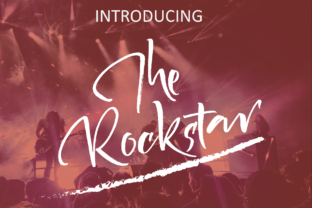
The Rockstar is a brush-style handwritten font built around a large set of handcrafted characters. Instead of relying solely on standard digital letterforms, its glyph set includes numerous alternates, ligatures, and flourishes that give each piece of text a natural, varied appearance. The handwritten quality is intentional: strokes mimic the irregular pressure and flow of an actual brush, resulting in a look that feels organic rather than mechanically perfect. This makes it distinct from many script fonts that use a limited number of repeated forms.
Reasons to Consider The Rockstar
People looking for a font with character and individuality often gravitate toward hand-drawn typefaces. The Rockstar appeals to those who want their text to feel personal and expressive. Its wide glyph range is designed to let you avoid repeating the same letter shape too often, which is a common shortcoming in simpler script fonts. This variety can make branding materials, logos, or personal projects feel more custom and less template-like.
Key Benefits and Capabilities
- Unique handmade aesthetic: Each glyph is drawn by hand, so the texture and flow convey a sense of real brushwork. This can add warmth and authenticity to designs.
- Extensive glyph selection: With a large number of alternates, you can craft text that looks less repetitive and more natural, especially in longer headlines or quotes.
- Versatility in design contexts: Because of its expressive style, the font works well for branding, packaging, social media graphics, and invitation design where a personal touch is valued.
- Supports multiple languages and OpenType features: Many versions of The Rockstar include contextual alternates, ligatures, and stylistic sets, giving designers control over the final appearance.
Tradeoffs and Considerations
No font is ideal for every situation, and The Rockstar comes with clear tradeoffs. Its handwritten brush style, while beautiful, can reduce legibility in small sizes or when used for long blocks of body copy. The irregular stroke widths and flourishes that make it expressive can also make it harder to read quickly. If your project requires high readability in dense text, this font may not be the best choice.
Another consideration is the file complexity. A font with hundreds of alternates and OpenType features may require design software that supports these features (such as Adobe Illustrator or InDesign). Users working with simpler tools might not be able to access the full range of glyphs, limiting the font’s value. Additionally, the price point for a premium handwritten font can be higher than that of standard system fonts, so budget may factor into your decision.
When The Rockstar Is a Strong Fit
The Rockstar excels in contexts where the visual personality of the typeface is the focal point. Consider using it in:
- Branding for creative businesses: Artists, designers, boutique agencies, and lifestyle brands often benefit from a font that feels handcrafted and approachable.
- Logos and wordmarks: The variety of glyphs allows you to create a unique lockup that stands out from generic script logos.
- Social media posts and quotes: Short, impactful text paired with the font’s brush character can increase engagement and convey authenticity.
- Packaging for artisan products: Handwritten fonts align well with products that emphasize craftsmanship, such as handmade soap, craft coffee, or organic foods.
- Invitations and stationery: Weddings, parties, or personal events where a warm, human touch is desired.
When Alternatives May Be Worth Considering
There are several scenarios where The Rockstar might not be the optimal choice:
- Body text or long-form content: If you need to set paragraphs of text, a more legible serif or sans-serif font will serve readers better. The Rockstar is best reserved for headlines or short lines.
- Formal or corporate communication: A handwritten brush font may feel too casual for legal documents, annual reports, or professional presentations where a conservative tone is required.
- Small sizes or low-resolution screens: The fine details and irregular strokes can become muddy at small point sizes or on low-resolution displays, reducing clarity.
- Tight budgets: Free handwritten fonts exist, though they often lack the glyph range and OpenType support of premium options. If your project cannot justify the cost, exploring free alternatives might be necessary.
Practical Decision-Making Insights
To determine if The Rockstar aligns with your goals, start by evaluating the purpose of your text. Ask yourself: Will the font be used for short, attention-grabbing lines, or does it need to convey information efficiently? If the former, the font’s handmade charm is an asset. If the latter, you should test it in context at the intended size and medium.
Next, consider the technical environment. If you or your team design primarily in software that supports OpenType features (most professional tools do), you can take full advantage of The Rockstar’s alternates. For web usage, weigh the impact of loading a font file with many glyphs on performance. While not typically a major issue, it is a practical detail.
Try before you buy. Many foundries offer demo versions or allow you to test the font with a sample of your own content. Use this to check legibility, overall feel, and how it pairs with other typefaces. A strong pairing—for example, using The Rockstar for headings with a clean sans-serif for body copy—often mitigates readability concerns while preserving the font’s impact.
Finally, compare it to similar brush handwriting fonts. Look for alternatives that offer a different weight, slant, or level of ornamentation. If you need a wider range of styles (e.g., multiple weights or italics), you may need to purchase a family rather than a single style. The Rockstar is typically sold as a single style with extensive alternates, which works well for focused use but may not cover all weight requirements.
Final Thoughts on Aligning The Rockstar With Your Needs
The Rockstar is a thoughtfully crafted brush script that brings a hand-drawn quality to digital design. Its hallmark is the large array of handmade glyphs that allow for non-repetitive, organic text. It is best suited for projects where personality and visual texture are priorities—branding, headlines, invitations, and other short-form uses. However, its expressive nature means it is less suitable for extended reading, formal contexts, or situations where maximum legibility is critical.
By weighing the font’s strengths against your project’s specific requirements, you can make an informed choice. If your goal is to infuse a design with a genuine, handcrafted feel and you have the tools and design approach to utilize its features, The Rockstar can be an effective addition to your type palette. For other needs, exploring alternatives may yield a better fit. The key is matching the font’s inherent character to the communication objectives you aim to achieve.