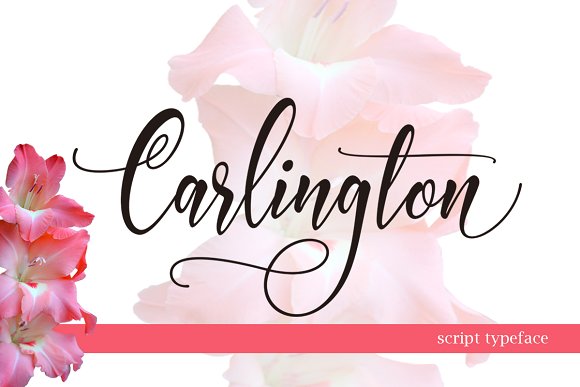
Carlington Script: A Modern Font with 340+ Glyphs
When you open a font menu, you are often choosing between personality and readability. Script fonts tend to lean hard into personality, but they can fall short when a project demands nuance—a second look, a subtle variation, a character that does something unexpected. Carlington, a modern script font built around more than 340 unique glyphs, steps into that gap. It offers enough range to feel expressive without losing the clarity that keeps text legible across formats. The result is a typeface that does not demand attention so much as earn it.
What Carlington brings to a creative toolkit
Carlington is not just another cursive option. Its extensive glyph set includes multiple alternates, ligatures, and swashes that give each word a handmade feel. You get the rhythm of natural handwriting without sacrificing consistency. For designers and marketers who have cycled through the same few script fonts on every project, this variety opens up new paths. You can set the same phrase five different ways and get five distinct moods—playful, elegant, casual, deliberate, or refined.
That flexibility matters when you are building a brand identity or a campaign that needs to feel original without reinventing the wheel every time. Instead of layering effects or forcing a font into places it does not belong, Carlington adapts because it already contains the range you would otherwise have to fake.
More than letters: glyphs that do the work
The 340-plus glyphs in Carlington are not decoration. They are functional alternatives that solve common typographic problems. For example, certain letter combinations that usually look awkward in script fonts—like ff, tt, or oo—can be smoothed out with context-aware ligatures. You also get beginning and ending swashes that let you start a word with flourish or close it cleanly. This is especially useful for headlines, pull quotes, and short text blocks where each character carries visual weight.
When you add alternate glyphs, you also gain control over how formal or relaxed a piece feels. A single word can swing from structured to loose simply by swapping a few characters. That kind of granular control is rare in ready-made script fonts, and it gives you room to tailor the output to a specific audience or medium.
Practical uses for different creative roles
Carlington is versatile enough to serve multiple audiences, and each user will approach it differently. Here is how it can work across common scenarios.
For branding and identity designers
Logos that rely on script type often struggle to hold up at small sizes or in one-color applications. Carlington addresses this because its glyphs maintain consistent stroke weight and open counters. You can scale it down for a business card or enlarge it for a storefront sign without losing legibility. The alternate glyphs also let you create a custom lockup that does not look like every other script logo in the same industry. A coffee shop, a florist, a wedding planner—each can use the same base font and walk away with an identity that feels distinct.
For marketers and content creators
Social media graphics, email headers, and landing page titles benefit from a script font that does not scream "template." Carlington gives you enough variation to rotate looks within the same campaign without breaking visual continuity. You can use a swashed alternate for a launch announcement and a simpler glyph set for follow-up content. The audience sees consistency without repetition.
For marketing teams producing quarterly reports or product guides, Carlington works well as an accent typeface paired with a clean sans-serif. Use it for chapter openers, section dividers, or short quotes. It breaks up dense information and gives the reader a visual rest point.
For bloggers and publishers
Blog headers, post titles, and featured quotes can feel flat when set in the same body font. Carlington introduces warmth and motion. A personal brand blog, a lifestyle publication, or a creative portfolio site can use it to signal a human voice behind the content. Pair it with a neutral serif for body text, and the contrast draws the eye without competing for attention.
Publishers producing ebooks or print-on-demand titles can use Carlington for chapter titles, drop caps, or decorative elements. The glyph variety keeps each chapter from looking identical, which adds value for readers who browse physical copies before buying.
For educators and hobbyists
Not every user of Carlington is a professional designer. Hobbyists creating wedding invitations, holiday cards, or personal stationery will appreciate that the font looks polished without requiring deep typography knowledge. You can type a phrase, experiment with ligature settings, and get a result that looks deliberate. For educators preparing classroom materials, worksheets, or visual aids, Carlington adds a friendly human touch that standard classroom fonts lack. It can make a handout feel less institutional and more inviting.
Adapting Carlington for different platforms and formats
One font rarely performs the same way across every medium, but Carlington holds up well when you consider a few practical adjustments.
Print: wedding suites, stationery, packaging
For printed pieces, Carlington shines at mid to large sizes. Invitations and place cards benefit from the swashes and alternates because they add elegance without extra ornamentation. If you are printing at small sizes, avoid the most ornate alternates and stick with the base glyphs to keep letters distinct. Paper stock matters too—rough or textured paper can soften fine details, so test a few variations before committing to a run.
Digital: websites, social graphics, presentations
On screens, Carlington retains its detail well at typical heading sizes (18px and above). For social media, where every pixel counts, the font's clean stroke consistency means you can use it in stories, posts, and cover images without aliasing or blur. When building a website, load Carlington as a web font and limit its use to headers or decorative text to keep page weight manageable. Pair it with a system font or a lightweight sans for body copy so performance stays solid.
Motion: video titles, lower thirds, animated quotes
For video content, Carlington works in motion graphics as long as you keep animations simple. Slower reveals, fade-ins, and gentle scaling let the glyphs breathe. Avoid fast transitions or heavy tracking, which can make script fonts feel jerky. The font's natural rhythm handles better when you give each word a moment to register.
Keeping typography organized and effective
A font with many alternates can tempt overuse. The best results come from restraint. Pick two or three alternates per project and use them consistently. If you use a swashed "A" at the start of a headline, do not switch to a plain "A" in the next line. Establish a pattern early and follow it. This applies across documents, campaigns, and brand systems.
When pairing Carlington with other typefaces, choose a sans-serif that shares similar proportions. Avoid pairing it with another script or a decorative font. The contrast between script and clean sans creates the most readable and professional results. For extended text, use a serif that has moderate x-height to balance Carlington's curves.
Spacing matters more with script fonts than with geometric ones. Adjust letter spacing manually in headlines to avoid collisions between swashes. Most design software allows you to kern individual pairs, so take a few minutes to review problem combinations like Wi, Vo, or To. A small adjustment prevents visual clutter and keeps the font looking intentional rather than accidental.
Originality without reinvention
What makes Carlington useful over time is that it gives you creative room without demanding constant novelty. You can return to it for multiple projects and get different results simply by using different glyph sets or pairing it with a different complement font. That longevity is rare in script fonts, which often feel dated after a season or two. Carlington's design is modern enough to stay relevant, but its gesture toward handwritten lettering gives it a classic anchor.
For small business owners and entrepreneurs who produce their own marketing materials, this kind of flexibility is practical. You do not need to commission custom lettering or license a new typeface every quarter. One solid investment in Carlington, paired with thoughtful use of its alternates, can carry your brand through multiple campaigns without looking repetitive.
For freelancers and creative professionals who juggle diverse client work, Carlington becomes a reliable tool that adapts to each brief. A wedding invitation this week, a product launch next week, and a publication layout the week after—the font fits each context without forcing you to adjust your approach. The work stays consistent, and the client sees originality.
Practical inspiration: where to start
If you are trying Carlington for the first time, open a simple word like "hello" or "love" and cycle through the alternates. See how the tone shifts when you swap one glyph. Then try a longer phrase and adjust ligature settings to observe how the connections change. This quick exploration gives you a feel for what the font can do before you commit to a full design.
For a project that requires immediate impact, use Carlington on a single word or short phrase at large scale. Let the glyphs carry the visual weight. Avoid adding effects like shadows or outlines—the font's detail speaks for itself. If you need a second visual element, pair it with a subtle background texture or a minimal geometric shape. The focus stays on the type, and the result looks clean.
When you are ready to push further, experiment with color. Carlington's open counters and balanced strokes handle color fills well. Try a gradient, a duotone effect, or a single accent color applied only to swashes. These small treatments can give a piece a bespoke look without complicating the layout.
Ultimately, Carlington works because it gives you choices that feel like expansions rather than gimmicks. The more you use it, the more you discover how those 340-plus glyphs translate into real projects that connect with real audiences. And that is the point of a good typeface—not to be noticed, but to make everything around it better.