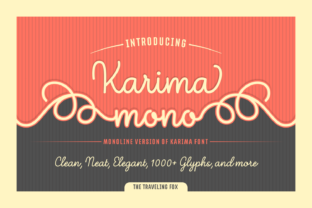
Karima Mono: A Monoline Script with Over a Thousand Glyphs for Limitless Creativity
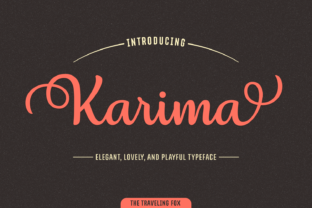
Choosing the right script font can be the difference between a forgettable design and one that truly resonates. For designers who value both elegance and efficiency, the search often leads to options that compromise either variety or readability. Karima Mono steps into this space as a monoline script that refuses to make those trade-offs. With more than 1,000 unique glyphs, multilingual support, and over 20 stylistic alternates, it offers a level of flexibility that feels almost custom-built for each project.
Monoline scripts, by nature, carry a certain honesty. The consistent stroke weight gives them a clean, modern aesthetic while retaining the fluidity of handwriting. What sets Karima Mono apart is not just its visual appeal but the sheer volume of options packed into a single typeface. Whether you are designing for print, digital, or branding, this font invites you to explore combinations that never feel repetitive.
What Exactly Makes a Monoline Script Worth Your Time?
Monoline scripts are defined by their uniform stroke thickness. Unlike traditional calligraphic fonts that rely on thick and thin variations, monoline typefaces present a more consistent line. This quality makes them highly legible at smaller sizes and incredibly versatile across different mediums. Karima Mono embraces this principle while adding a layer of sophistication through its extensive glyph set.
When you open a font and find over a thousand characters waiting, it changes the way you approach a layout. You are no longer limited to the same few letters repeating across a headline. Instead, you can pick and choose from multiple versions of the same character, tailoring the typography to the mood or message. For brands that rely on distinctive voice and visual identity, this kind of variety is invaluable.
Another factor designers often weigh is how a font behaves across languages. Karima Mono is multi-lingual, which means it supports a wide range of Latin-based languages along with additional character sets. If your work involves international clients, localized campaigns, or multi-language packaging, having a single script typeface that handles accents, diacritics, and special characters gracefully saves time and preserves visual consistency.
Over Twenty Stylistic Alternates: Moving Beyond Repetition
Stylistic alternates are the secret weapon of any serious type library. They allow you to swap standard glyphs for more decorative or varied forms without changing fonts. In the case of Karima Mono, there are more than 20 such alternates available. This means you can create a headline where no two letters look exactly the same, even when the same character appears multiple times.
Imagine working on a wedding invitation suite. The word "Love" might appear in the main headline, then again in a subheading, and perhaps in a decorative element. Instead of the same shape repeating, you can choose different stylistic alternates for each instance. The result feels hand-lettered, organic, and deeply personal. That is the kind of flexibility that turns a good design into a memorable one.
For social media graphics, where quick capturing of attention matters, the alternates let you inject personality without extra illustration. A quote graphic can feel dynamic simply by varying the letterforms. The same principle applies to logos, product labels, and signage. With over 20 alternates, you are not just typing words — you are composing them.
How Monoline Scripts Fit into Modern Workflows
Design workflows today demand speed without sacrificing quality. Whether you are a freelance designer juggling multiple clients or part of an in-house creative team, a font that delivers instant variation is a practical asset. Karima Mono integrates seamlessly into software like Adobe Illustrator, Photoshop, InDesign, Figma, and even Canva with proper OpenType support.
Accessing the stylistic alternates is straightforward. In most design applications, you simply open the Glyphs panel or use the OpenType features menu. From there, you can preview and apply the different versions of each character. This eliminates the need to manually edit paths or create custom lettering from scratch, saving hours on larger projects.
For packaging designers, the monoline quality ensures that fine details remain crisp even when scaled down or embossed. The consistent stroke weight also works well with foil stamping, engraving, and other print finishing techniques. And because the font includes over 1,000 glyphs, you have access to ligatures, swashes, and contextual alternates that add flair without complicating the layout.
Web designers and UI creators can also benefit. While script fonts are traditionally reserved for headlines or hero sections, the legibility of a monoline script like Karima Mono makes it usable for shorter body text or call-to-action buttons. Its clean lines render well on screens, especially at medium to large sizes. Just be mindful of readability at very small scales — like any script, it shines best when given room to breathe.
Practical Benefits You May Not Have Considered
One of the less obvious advantages of Karima Mono is its ability to unify a brand identity. When you have a single font that offers so many variations, you can use it across different touchpoints — website headers, product packaging, email signatures, social media posts — while still keeping the visual language cohesive. The alternates give you the freedom to differentiate each piece without introducing a secondary typeface.
Another benefit is the reduction of font fatigue. Designers sometimes find themselves switching between multiple script fonts to keep projects feeling fresh. With Karima Mono, you can rely on one core typeface and simply adjust the letterforms via stylistic alternates. This simplifies font management, licensing, and ensures consistency across a body of work.
Multilingual support also broadens your reach. If you design for markets that require accented characters or non-standard punctuation, you know how frustrating it is when a beautiful script font lacks those glyphs. Karima Mono covers that gap, so you do not have to settle for a substitute typeface or manually construct missing characters.
Common Factors to Consider Before Adopting a New Script Font
Before you commit to any script typeface, there are a few practical factors worth evaluating. First, consider the context. Monoline scripts tend to work beautifully for bold statements, focused typography, and designs that lean minimalist or modern. If your project requires heavy information hierarchy or dense text, a script may not be ideal for body copy — but it can elevate headers and accents.
Second, examine the glyph set. Not all monoline scripts come with over 1,000 glyphs. Many offer only basic characters with a handful of alternates. Karima Mono stands out because you are getting a library of possibilities within one file. This reduces the need to purchase multiple fonts for different effects. Whether you need swashes for a romantic invitation or clean ligatures for a professional logo, the resources are already there.
Third, test the font in your actual workflow. Most reputable foundries provide trial versions. Try Karima Mono on a few real projects before purchasing a full license. See how the alternates behave, how the font renders at different sizes, and whether the monoline aesthetic aligns with your typical design palette. Hands-on testing reveals nuances that preview images simply cannot show.
Real Scenarios Where This Font Changes the Game
Consider a small business owner launching a boutique bakery. They need a logo that feels artisanal but not overly fussy. Using Karima Mono, you can create a custom wordmark by selecting stylistic alternates that give each letter a unique personality. For the menu, you can use a simpler set of ligatures for readability, while the packaging might get swash-heavy alternates for a decorative touch. One font, three distinct looks.
Or think about a content creator building a personal brand. They need consistent typography across YouTube thumbnails, Instagram stories, and a blog header. With this font, the monoline script becomes their signature style. They can vary the alternates per post to keep things dynamic without straying from the brand identity. Over time, followers start recognizing the typography as part of the brand itself.
Nonprofit organizations running fundraising campaigns also benefit. A monoline script conveys warmth and approachability, which is crucial for cause-driven messaging. By using the multi-lingual capabilities of Karima Mono, the same campaign materials can be adapted for different regions without losing visual continuity. This reduces production time and keeps the message consistent across languages.
Observations from the Designer's Perspective
One thing experienced designers quickly notice is that Karima Mono does not force you into a singular style. The monoline structure is neutral enough to pair with serif, sans-serif, or display fonts. The alternates allow you to shift from playful to elegant depending on the project. This versatility makes it a reliable workhorse in a type library.
Another observation is the quality of the glyphs themselves. Over 1,000 unique characters means attention has been paid to details. Alternates are not just random variations; they are crafted to work harmoniously within the font's overall rhythm. Ligatures connect smoothly, and swashes extend naturally without overpowering the letterforms. This level of polish is what separates a thoughtfully designed typeface from a merely decorative one.
From a licensing perspective, many designers appreciate fonts that offer commercial flexibility. Always check the specific license agreement for Karima Mono — but generally, investing in a robust typeface with extensive glyph coverage proves more economical than purchasing multiple simpler fonts. For agencies and independent designers alike, this efficiency adds up quickly.
Final Thoughts on Integrating a Monoline Script with Depth
Typographic choices define the personality of a design. Karima Mono gives you the tools to shape that personality with precision and variety. Its monoline construction provides clarity and modern appeal, while the vast array of glyphs and stylistic alternates ensures you never feel boxed in by limited options. Whether you are designing for print, screen, packaging, or branding, having a font that adapts to your creative direction — rather than the other way around — is a genuine advantage.
The next time you start a project that calls for a script, consider what lies beneath the surface. A font with over a thousand glyphs, multilingual support, and more than twenty alternates is not just a typeface. It is a creative partner. And in a world where differentiation matters more than ever, Karima Mono offers a direct path to work that feels original, polished, and unmistakably yours.