Phaeton: A Fluid Handwritten Font for Branding
When selecting a typeface for branding or decorative projects, designers often weigh artistic expression against readability and versatility. Phaeton is a fluid handwritten font that occupies a distinctive space in this decision matrix. Its flowing letterforms and organic character appeal to those seeking a personal, human touch in digital or print media. However, like any specialized typeface, it carries both strengths and limitations that deserve careful evaluation. This article examines Phaeton from a practical standpoint—exploring what it offers, where it excels, where it may fall short, and how to determine whether it aligns with your project goals.
What Phaeton Is: A Handwritten Typeface with Fluid Characteristics
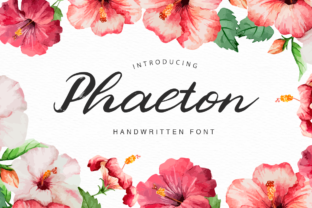
Phaeton is classified as a fluid handwritten font. This means its letters mimic natural handwriting, with smooth connections between strokes and varying stroke widths that give the appearance of being penned with a flexible nib or brush. Unlike rigid script fonts that follow strict mechanical rules, Phaeton introduces subtle irregularities—slight slants, variable loops, and spontaneous flourishes—that evoke the authenticity of hand lettering.
The font typically includes uppercase and lowercase characters, numerals, punctuation, and multilingual support, though exact glyph coverage may vary by version. Designers often describe Phaeton as having a casual yet refined quality: it avoids the extremes of being too messy or too formal. This middle ground makes it adaptable for contexts where a humanized voice is desired without sacrificing legibility.
Why People Consider Phaeton: Common Use Cases and Motivations
Interest in fluid handwritten fonts like Phaeton often stems from a need to stand out in a saturated visual landscape. Standard sans-serif and serif typefaces dominate much of commercial design, and adding a handwritten element can break through the monotony. Specific reasons for considering Phaeton include:
- Branding projects that aim to convey warmth, creativity, or artisanal quality.
- Decorative text emphasis on invitations, logos, headers, and social media graphics.
- Packaging design for products like craft beverages, handmade goods, or organic supplements.
- Digital media such as website hero images, banners, or video titles where a personal touch is needed.
- Wedding or event materials that require a romantic or elegant handwritten aesthetic.
These motivations share a common thread: the desire to inject personality and authenticity into visual communication. Phaeton facilitates this by offering a ready-to-use handwritten style that saves the time and cost of commissioning custom calligraphy.
Visual Appeal and Emotional Resonance
Handwritten fonts inherently carry emotional weight. The fluidity of Phaeton can make a design feel more approachable, intimate, and sincere. For branding, this can translate into stronger connections with audiences who value craftsmanship and individual expression. The font’s natural letter variations help avoid the monotony of digital uniformity, which is especially valuable in small doses—such as a headline or brand name.
Versatility in Tone
Phaeton sits at a balanced point on the handwritten spectrum. It is neither overly ornate like copperplate scripts nor too casual like a quick scrawl. This allows it to work in both elegant contexts (e.g., a boutique hotel logo) and more relaxed ones (e.g., a creative agency’s tagline). Its medium weight and moderate contrast make it readable at reasonable sizes, unlike some extreme brush or script fonts that become illegible in smaller point sizes.
Efficiency and Accessibility
Because Phaeton is a digital font file, it can be installed and used across design software (Adobe Suite, Affinity, web CSS, etc.) without the need for manual lettering. This speeds up iterative design and makes it easy to maintain consistency across materials. Many versions of Phaeton include OpenType features such as alternate characters, ligatures, and stylistic sets, giving designers control over how “handwritten” the text appears.
Trade-Offs and Considerations
No font is universally perfect, and Phaeton presents several considerations that potential users should weigh carefully.
Legibility at Small Sizes
Handwritten fonts, including Phaeton, often lose clarity when scaled down below 12–14 points. The fluid strokes can blend together, making text hard to distinguish—especially for body copy or lengthy paragraphs. If your project requires extensive reading text, Phaeton is best reserved for headlines, short phrases, or decorative accents rather than continuous prose.
Limited Formal Appeal
While Phaeton’s casual personality is a strength in many contexts, it can clash with strict corporate or institutional branding that requires neutrality, hierarchy, and precision. Using it in formal reports, financial documents, or academic posters would likely undermine the intended professionalism. Similarly, pairing it with overly geometric or cold typefaces may create visual dissonance without careful typographic hierarchy.
Licensing and Consistency
Phaeton may be available in multiple licenses (free for personal use, paid for commercial use). Designers must verify that the version they intend to use covers their specific needs—especially for branding, where a commercial license is typically required. Additionally, because Phaeton is designed to look “fluid,” the default letter connections may not always look right in every word combination; skilled typographers sometimes need to adjust spacing or manually choose alternate glyphs to avoid awkward collisions or gaps.
Scenarios Where Phaeton Is a Strong Fit
- Brand identification marks for small businesses, artists, or artisans—where the name itself benefits from a handwritten feel.
- Invitations and greeting cards (both print and digital) that need a personal, handcrafted aesthetic.
- Social media graphic headers where a large, decorative word or phrase draws attention.
- Product labels for handcrafted or premium goods, especially in food, beauty, or lifestyle categories.
- Short call-to-action text on websites (e.g., “Shop Now,” “Get in Touch”) where a humanized tone can increase engagement.
When Alternatives May Be Worth Considering
For projects that demand high legibility over long passages, a clean sans-serif or a well-designed serif is more appropriate. For highly formal or corporate contexts, traditional script fonts (like those based on classic calligraphy) or neutral typefaces often carry a more appropriate tone. If you need extreme customization—such as phonetic hand lettering that matches a specific brand voice—commissioning a custom typeface might be better than using an off-the-shelf font like Phaeton.
Also, if your project involves multiple scripts (e.g., Cyrillic or non-Latin alphabets), check that Phaeton supports the required character sets. Some handwritten fonts have limited multilingual coverage, which could force you to mix typefaces and create inconsistency.
Practical Decision-Making Insights
To determine whether Phaeton aligns with your needs, consider these steps:
- Define the primary function of the text. If it exists to convey information through long reading, avoid Phaeton. If it exists to evoke a feeling in a short burst, Phaeton may be ideal.
- Test at intended sizes before committing. Download a sample and render your brand name or key phrase at the actual display size. Check legibility and visual appeal at that size, not just at the default preview.
- Pair with a neutral companion font for body copy. Phaeton works best as a display face; choose a clean sans-serif (like Open Sans, Lato, or Montserrat) or a classic serif (like Georgia or Cormorant Garamond) to provide contrast and structure.
- Review licensing terms for commercial use. Many free handwritten fonts restrict commercial applications; purchasing a commercial license ensures you have the legal right to use it in branding and products.
- Check for OpenType features to customize the appearance. Using stylistic alternates can reduce repetitive look in repeated letters, a common drawback of handwritten fonts.
- Consider your audience. A handwritten font like Phaeton may resonate strongly with a creative or millennial demographic but could feel gimmicky to an older or more conservative audience. Test your design with representative users if possible.
Final Thoughts on Evaluation
Phaeton offers a fluid handwritten aesthetic that can elevate design projects where personality and warmth are valued. Its balanced style makes it more versatile than many other script fonts, yet its limitations in legibility at small sizes and formal contexts are genuine trade-offs. By focusing on the specific role of the typeface in your project—whether as a headline, a logo element, or a decorative accent—you can assess whether Phaeton meets your functional and emotional goals. For many branding and display applications, it is a strong candidate; for others, a more neutral or precisely tailored alternative may serve better. Ultimately, the best choice depends on the interplay between your design objectives, audience expectations, and the practical constraints of your medium.